ColumnsBy FilmFocus
In the Age of AI, Film Photography Has Returned to the "World That Doesn't Close"
This is an AI translation of an article originally published in Japanese. If anything reads oddly, the Japanese original is the authoritative version.
When I came across Kazuto Ataka's framework "The World That Closes and the World That Doesn't", published in February 2026, I couldn't stop thinking about film photography.
AIがどこで強く効くかを半年前に整理した図。
— Kaz Ataka / 安宅和人 (@kaz_ataka) September 9, 2026
鍵は、
繰り返し可能か
誰がやっても結果がすべてか
の2軸。
コピーでき、再現でき、ログが残り、何度も試せる世界ほど、AIの圧縮圧力は強い。code生成はその典型。… pic.twitter.com/TbJZ3vxD7J
The structure of the diagram is simple. The horizontal axis is "the one-off nature of matter and time": is something repeatable, or does it happen only once? The vertical axis is "the value of a person being there": does the result come out the same no matter who does it, or does it matter decisively who does it? These two axes divide the world into four quadrants, and Ataka calls the upper right—one-off, and where the human involved adds a great deal of value—"the world that doesn't close in matter and time." Tempura, ceramics, musical performance, raising people. This is the domain where automation by AI is hardest, and where scarcity amplifies value. The lower left, by contrast, is "the world that closes in cyberspace": things that can be copied and optimized through repetition, where AI excels. Code generation and drafting legal documents belong here.
I work as a software engineer, and the software development I do every day sits in that lower-left quadrant. So where does film photography belong? I'd say the upper right. What's interesting, though, is that "photography" probably didn't start out there.
Photography was once swallowed by the "world that closes"
Photography was, from the outset, the archetypal technology of reproduction. The very first thing Walter Benjamin took up in The Work of Art in the Age of Mechanical Reproduction was photography. Digitization then moved photography almost entirely into the lower left. You could reshoot as many times as storage allowed, the data became lossless copies, and correction tools and techniques spread through software such as Photoshop. You could say the entire ecosystem moved toward "anyone can get a decent result." In the diagram's terms, photography is a textbook case of a technology swallowed by the zone of AI compression. A past FilmFocus column that used financial filings to trace how far film demand has fallen from its peak puts numbers on the scale of that swallowing.
Film alone, however, ran against the current. The reason isn't nostalgia. It's that the one-off nature of film is built into its structure as a technical constraint. The latent image recorded on film is chemically irreversible; the light from the moment the shutter fires can't be undone. On top of that, a roll has a fixed number of exposures. And you don't know the result until the film is developed. These have long been talked about as drawbacks, but placed on Ataka's diagram, they become direct indicators of a high degree of "one-off-ness of matter and time."
This brings Roland Barthes to mind. If Benjamin was the one who wrote about photography's "closing" side—its reproducibility—Barthes, in Camera Lucida: Reflections on Photography, wrote about its "non-closing" side. Barthes distills the essence of photography into the phrase "that-has-been." Light reflected from the subject physically reached the photosensitive surface at that very moment. A photograph is the trace of that fact, and so a photograph proves that "this really was there," as the argument goes.
Barthes summed up the essence of photography in the phrase "that-has-been," and the subject represented in a photograph must be something that actually existed in front of the camera's lens at the moment it was taken (in other words, the image can be said to be objective proof of the subject's "past reality").
What digital technology and AI have gradually taken away from photography is precisely this guarantee that "it was once there." Recent models are even capable of photorealistically generating "realities" that never existed at all. The one-off nature that remains in film is, put another way, a state in which what Barthes called the essence of photography is still technically guaranteed.
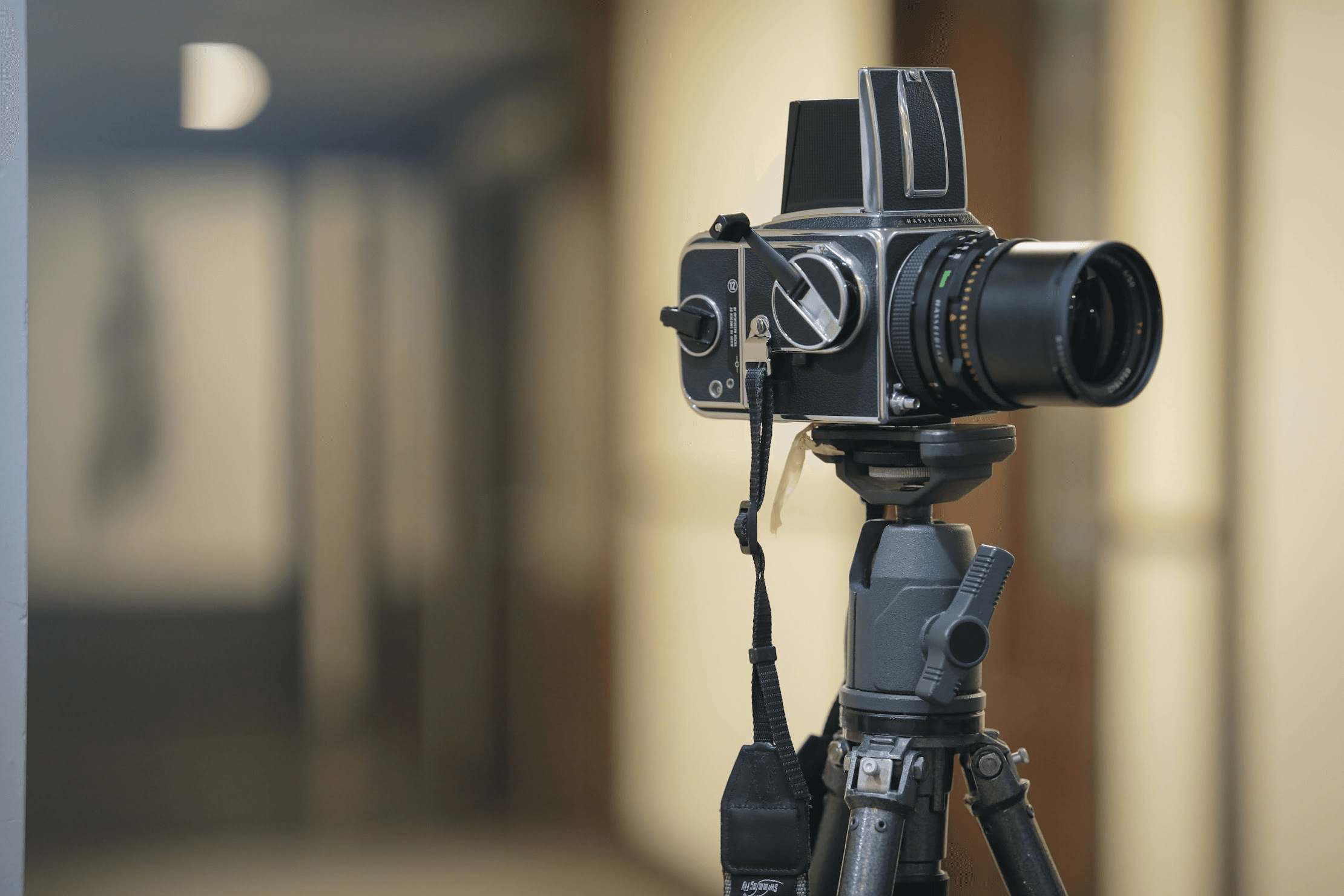
In the Film Photography Survey 2025, 52% of respondents named "the excitement of waiting for the photos to come out" as something they love about film photography. The one-off constraint of not knowing the result until development is being described, as is, as a source of enjoyment. Less experienced respondents were also more likely to cite "a chance to step away from the digital world," and a paper in Scientific Reports surveying 600 people in China backs up the same motivation from a different angle.
Stop calling one-off-ness a flaw
For a long time, the film photography community has in part reassured itself by recasting failures and inconveniences as "part of the charm." Ataka's diagram offers a chance to reframe that in more structural terms. One-off-ness isn't charm; it is the very source of a value AI can't compress. To borrow Barthes's words, it is the guarantee that "it was once there," and that value only comes into being because the person shooting and the person developing are there.
Film photography is the only form of photographic technology that has made its way back to the "world that doesn't close." The people who take up film from here on may well be those drawn to exactly that fact.