GuidesBy FilmFocus
What Are Push and Pull Processing? Adjusting Development Time to Match How You Shot
This is an AI translation of an article originally published in Japanese. If anything reads oddly, the Japanese original is the authoritative version.
On lab price lists you will sometimes see items like "増感" (push), "減感" (pull), "push" or "pull." These refer to changing the development time to match the conditions the film was shot under. Some labs offer this service and some don't.
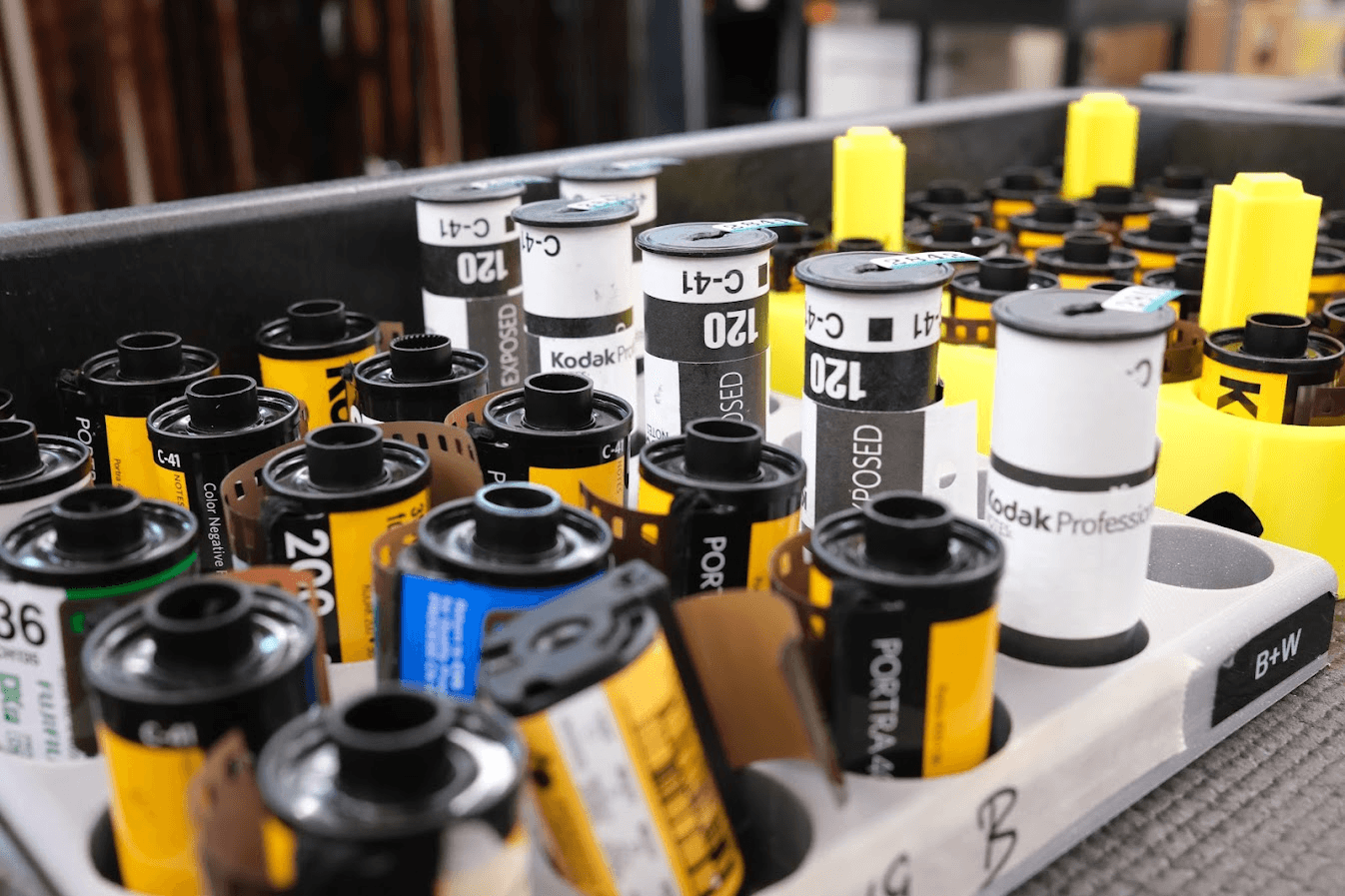
Push processing
This means shooting at a higher speed than the ISO printed on the film box and extending the development time to compensate. For example, if you shoot ISO 400 film at ISO 1600, you ask for a "2-stop push (+2)" when it is developed.
It is used when you need a faster shutter speed in dim conditions. The result tends to be coarser grain, higher contrast and lost shadow detail. Some people push film precisely to get this look.
Pull processing
The opposite: you shoot at a lower speed than the box rating and shorten the development time. Contrast drops and highlights hold up better. It is used less often than pushing.
Things to keep in mind when ordering
- You need to decide before you shoot. You can't change the speed partway through a roll, so every frame on that roll has to be shot at the same setting.
- Always tell the lab when you drop off the film. If you don't specify how many stops to push or pull, the film will be developed normally.
- There is usually an extra charge. Many labs charge a few hundred yen more than for standard development.
- Availability depends on the lab. Some labs accept requests in set increments, such as half stops for black-and-white and third stops for slide film, while others don't offer push or pull processing at all.
On FilmFocus, if we have been able to confirm on a lab's official website that it offers push and pull processing, we note this in the description on that lab's detail page. To be certain, check directly with the lab before sending your film. You can find a list of labs and their contact details in our film developing lab directory.
About cross processing
Some labs also accept "cross processing," where slide film is developed in C-41 chemistry meant for negatives. It produces a distinctive result with strong color shifts, but only a limited number of labs offer it. As with push and pull processing, check with the lab in advance.