GuidesBy FilmFocus
Negative vs. Reversal Film — How to Tell Which One You Have
This is an AI translation of an article originally published in Japanese. If anything reads oddly, the Japanese original is the authoritative version.
Look at a lab's price list and you'll see it split into categories like "color negative," "black and white" and "reversal (positive)," each with its own price and turnaround time. If you don't know which kind of film you've been shooting, you can't tell which price applies to you.
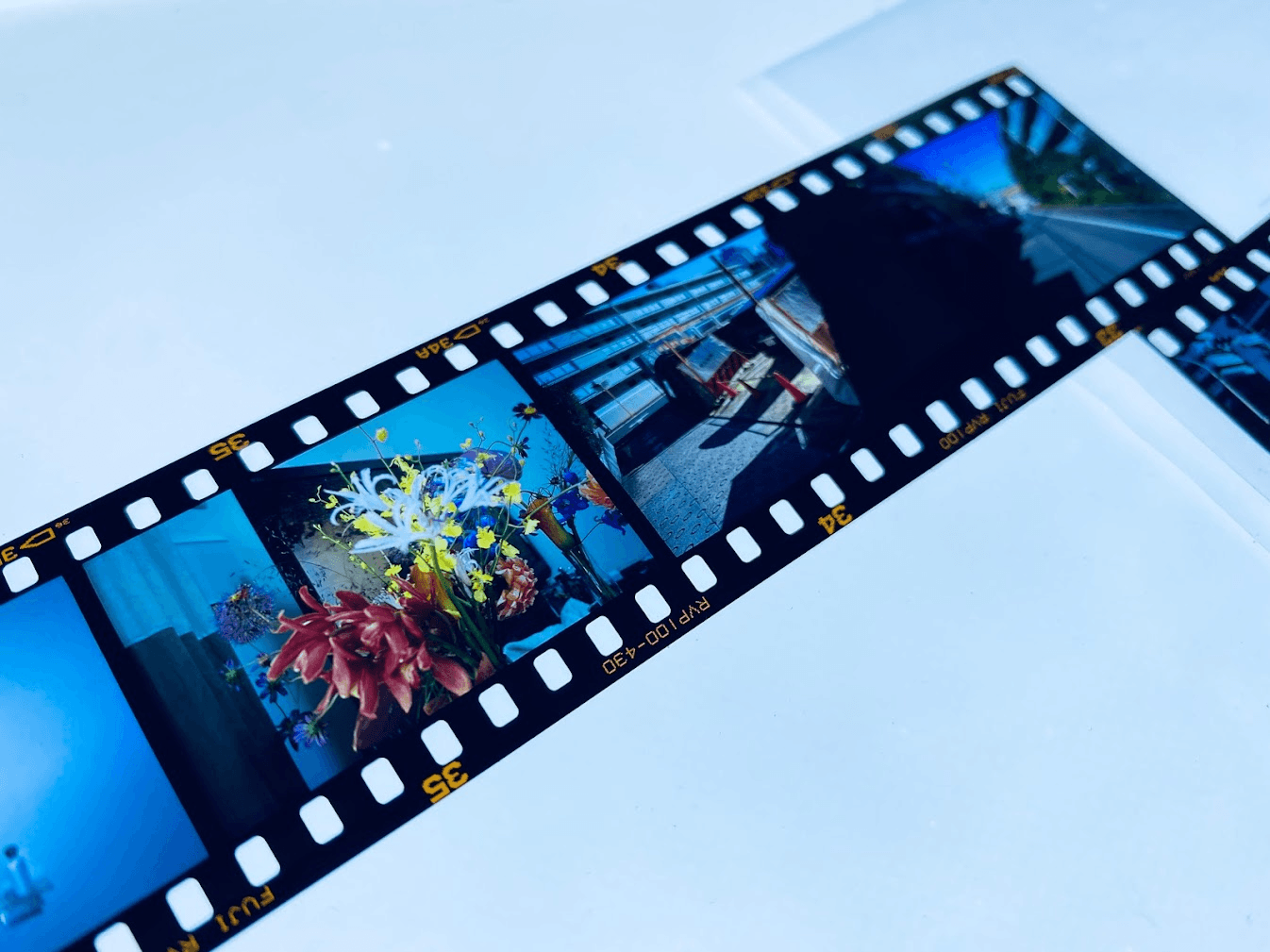 An example of positive film (Fufifilm Provia 100). Unlike negative film, it can be viewed directly on a light box, which is a big part of its appeal
The three types
- Color negative film: Film that records the image with tones and colors inverted. After development, the film has an orange-tinted look. The process is called C-41. It's the most common type: many labs handle it, it's inexpensive and it comes back quickly.
- Black-and-white film: Film that records in black and white. The processing method varies from film to film and requires dedicated chemicals. Fewer labs handle it than color negative, and it's often sent out to another lab, so it takes longer.
- Reversal film (positive, slide): Film that, once developed, shows the image in its actual colors, just as you saw it. The process is called E-6. Being able to view it directly on a light box is a big draw, but few labs support it, prices are on the high side and turnaround is longer.
Which one is your film?
The surest way to tell is to check the markings on the box or the film canister.
- Utsurundesu (写ルンです) and other single-use cameras use color negative film, not reversal. Most people taking film to a lab for the first time fall into this category.
- If the box says "COLOR NEGATIVE FILM" or "C-41," it's color negative. Many film names also end in COLOR or NEG.
- If you see "REVERSAL," "SLIDE," "E-6" or "CHROME," it's reversal. Velvia, Provia and Ektachrome are typical examples.
- If it says "B&W" or "BLACK AND WHITE," it's black and white. TRI-X, HP5 and Kentmere fall into this group.
If you're still not sure, take the film to a shop and show it to them, and they can tell you.
How price and turnaround differ
In general, color negative is the cheapest and fastest, while black and white and reversal cost more and take longer. Many shops don't process reversal in-house and send it to an outside lab instead, so it's not unusual for it to take around 10 days to two weeks.
On FilmFocus's lab detail pages, development and scanning prices are listed separately for color, black and white and reversal, for both 35mm and 120 (medium format). If you want to send in black-and-white or reversal film, choosing a lab that lists those prices is the safe bet. On the film lab list, you can also filter for labs that handle black and white or reversal.
What is 120 (medium format)?
It's a film size a step larger than 35mm, used in medium-format cameras. You'll see it called "Brownie," "120" or "220." The larger frame produces more detailed photos, but fewer labs handle it than 35mm, and prices are on the high side. Use the "Medium format (120)" filter on the lab list to show only labs that handle it.