NewsBy FilmFocus
Kodak Improves for a Fourth Straight Quarter as the Division Housing Its Film Business Grows 40% Year on Year
This is an AI translation of an article originally published in Japanese. If anything reads oddly, the Japanese original is the authoritative version.
Kodak has announced its results for the second quarter of 2026, returning to profitability with revenue of $311 million and net income of $17 million. A year earlier it posted a $26 million loss, and the segment that includes film grew 40% year on year, the fastest growth rate anywhere in the company.
According to the article, consolidated revenue rose 18% from $263 million in Q2 2025. Gross profit climbed 61% to $82 million, and gross margin improved from 19% to 26%. Operational EBITDA also grew, from $9 million to $36 million. By segment, Advanced Materials and Chemicals, which includes film, rose 40% to $105 million. The Print segment, which is larger by revenue, grew 10% to $195 million.
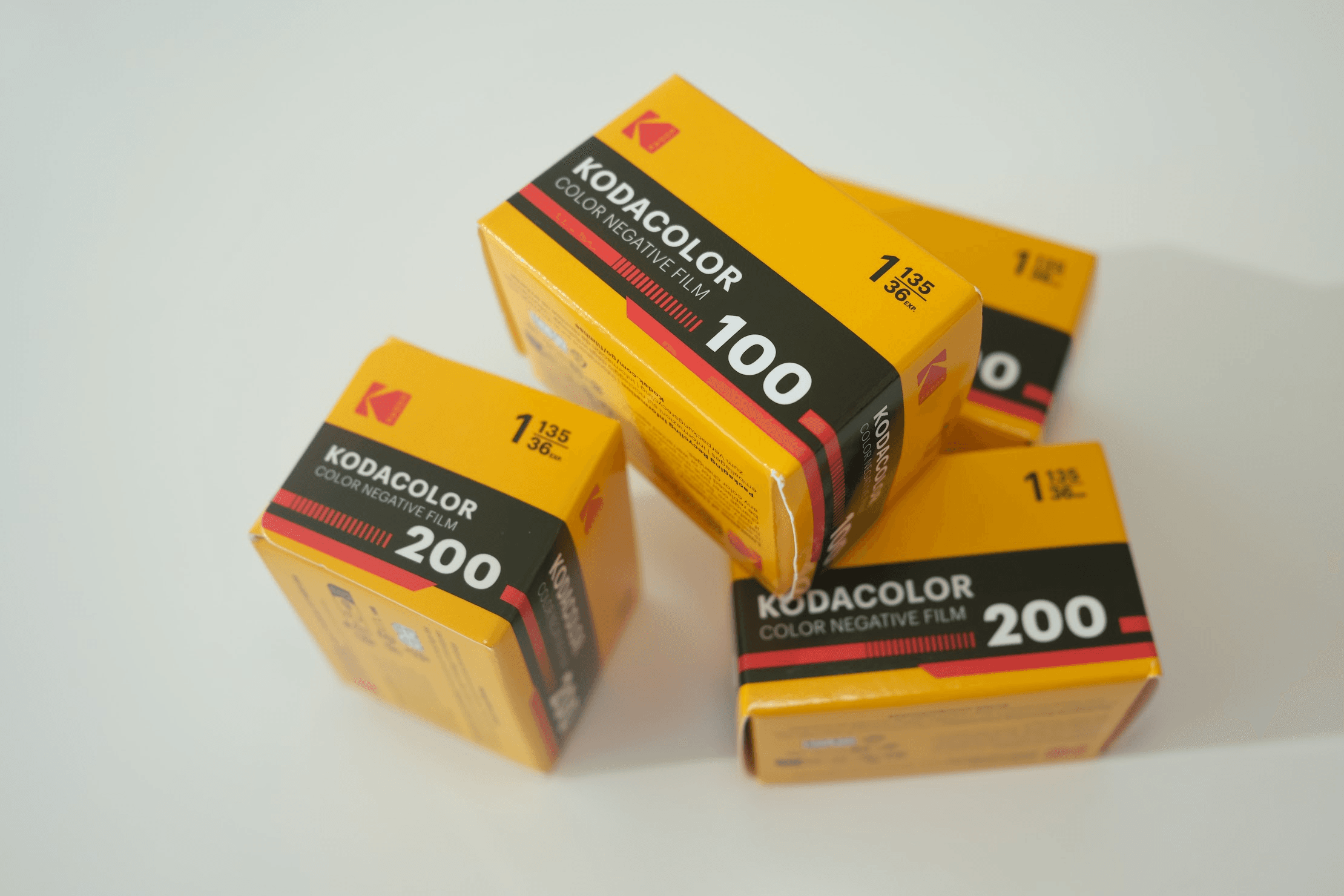 The Kodacolor 100/200 series, launched in late 2025
Compared with where things stood a year ago, this is a major turnaround. In its Q2 2025 filing, Kodak disclosed "substantial doubt about its ability to continue as a going concern" because roughly $500 million in debt was coming due without committed financing, and its share price plunged. That situation was resolved by November, and in December the company completed the reversion of its overfunded U.S. pension plan.
For film users, the biggest question is production capacity. Citing reporting by CineD, Fstoppers points out that Kodak has committed to "continue maximizing film production" for its fastest-growing segment.
Behind this is an analog revival that can be measured in real numbers. Kodak says consumer film demand has roughly doubled over five years, and in late 2024 it shut down its Rochester plant for five weeks to upgrade its film coating equipment (which the company described as an expansion). Much of the bottleneck reportedly lies in film finishing, the labor-intensive process of converting wide master rolls into cassettes that can actually be loaded into a camera. The article notes that finding people who can make emulsion or handle finishing is not easy, and that Kodak has spent years retraining staff for this work.
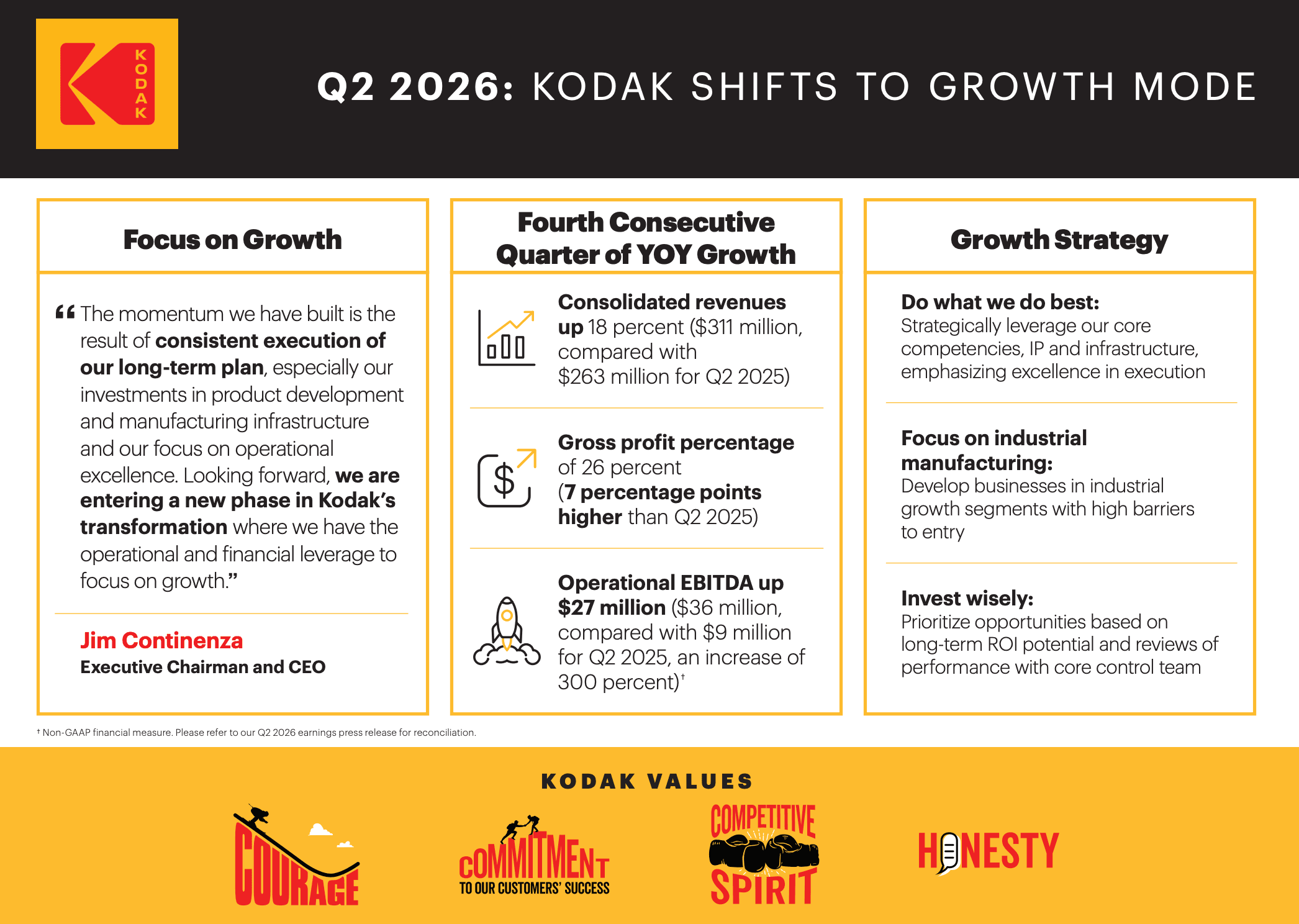 Part of the Q2 earnings materials. Excerpt from Kodak's press release
For users in Japan, memories of price hikes and shortages are still fresh, but the earnings figures at least show that film is driving Kodak's growth. What remains to be seen is how far the improved balance sheet will translate into real increases in coating and finishing capacity. As Fstoppers writes, that looks set to be the question Kodak will have to answer going forward.