NewsBy FilmFocus
Filmomat announces the Filmomat Neo, a new automatic film processor
This is an AI translation of an article originally published in Japanese. If anything reads oddly, the Japanese original is the authoritative version.
Filmomat, the maker of automatic film processors, has announced a new model, the Filmomat Neo. The company describes it as a machine stripped down to the bare essentials while being easier to use and maintain. Pre-orders are already open.
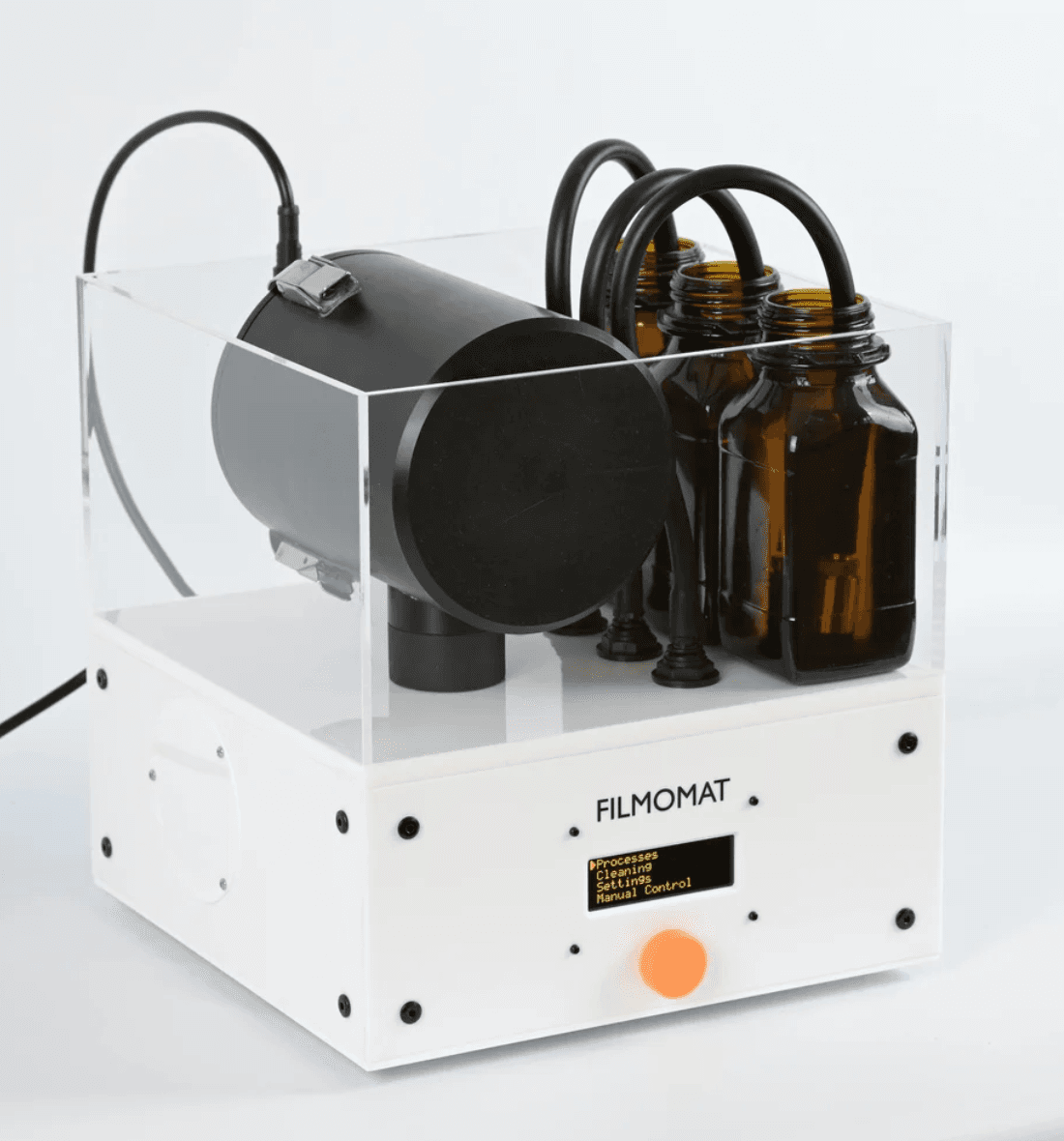 The newly announced Filmomat Neo. Source: filmomat.eu
The biggest change is how chemistry is handled. The Neo pumps developer and other solutions directly from their storage bottles and returns them straight to the bottles after processing. According to Filmomat, this eliminates refilling and the long wait for chemistry to drain, and also cuts down on cleaning.
The drive system is new as well. A new motor delivers precise rotation speeds from 20 to 120 rpm, which can be set individually for each process. The tank cap has also been redesigned and now uses a contactless magnetic drive, so the motor and the processing chemistry are kept sealed off from each other.
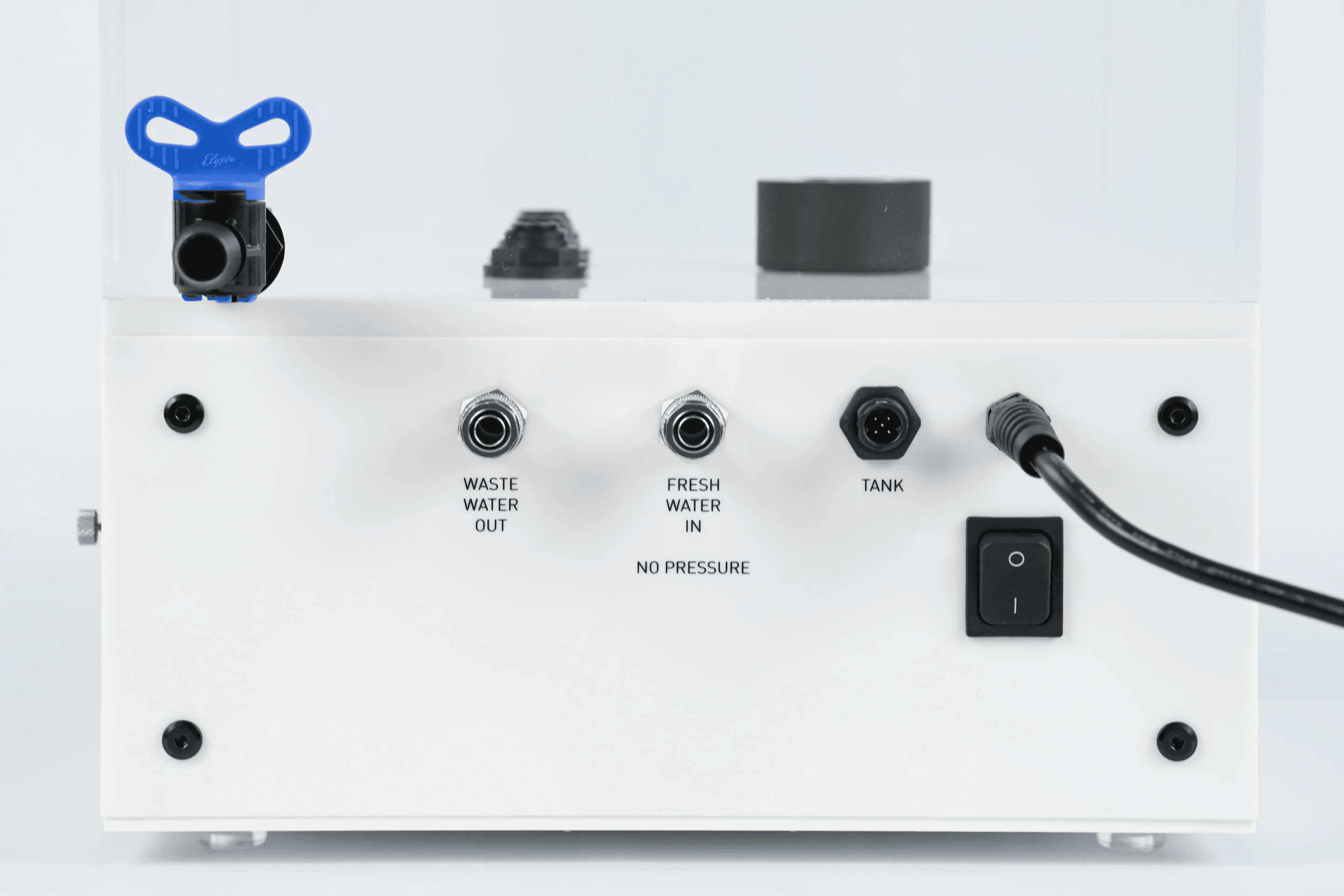 Source: filmomat.eu
For cleaning, there is a new automatic cleaning program. It uses one-tenth the water of the previous one, just 600mL per cycle.
Another point worth noting is temperature control. Instead of a built-in heater, the Neo uses an external sous-vide cooker. Filmomat chose this approach because sous-vide units are accurate, inexpensive, easy to find and easy to replace, and the developer calls it "a deliberate choice toward a simpler, more modular and more repairable machine." This setup also lets the company offer the Neo at a significantly lower price than the Filmomat Classic. At the time of writing, the direct-sales site listed it at €3.276,47.
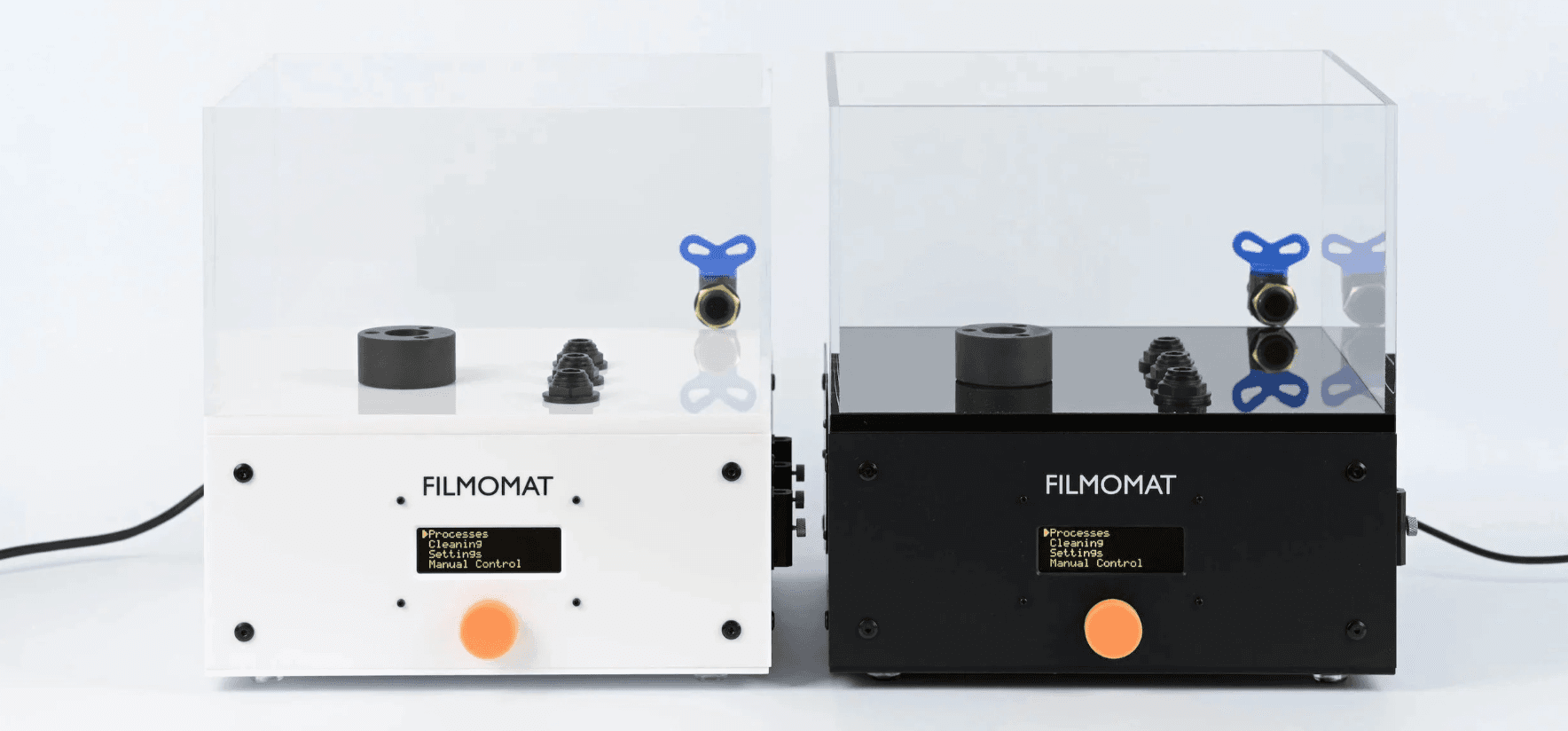 The Filmomat Neo comes in two colors. Source: filmomat.eu
It is available in two finishes, black and white. Both are made of matte acrylic glass with screen printing, aiming for a minimal, timeless look.
For people who develop C-41 and black-and-white at home, offloading temperature control to a generic sous-vide cooker looks like a sensible decision, both for dealing with breakdowns and for long-term parts availability.
One concern, however, is the number of processing steps. The NEO can handle three steps. That covers color negative (C-41) and black-and-white, and three-bath kits for reversal film (E-6) have also become available recently, but opinions are divided on the quality of their results. In contrast to the slightly larger dev.a series, which follows a similar concept but supports six steps and is pitched at full-fledged E-6 processing, the NEO is best thought of as a machine for running C-41 and black-and-white easily and reliably.