NewsBy FilmFocus
Aura Lab's Aura 35 Minilab Film Scanner Begins Shipping, Now Running in Labs in Europe and the US
This is an AI translation of an article originally published in Japanese. If anything reads oddly, the Japanese original is the authoritative version.
French company Aura Lab has started taking orders for the Aura 35 Minilab, a 35mm film scanner for photo labs. It is the company's second model, following the higher-end Aura 35 Pro released in 2025, and went on sale in the United States in September 2026.
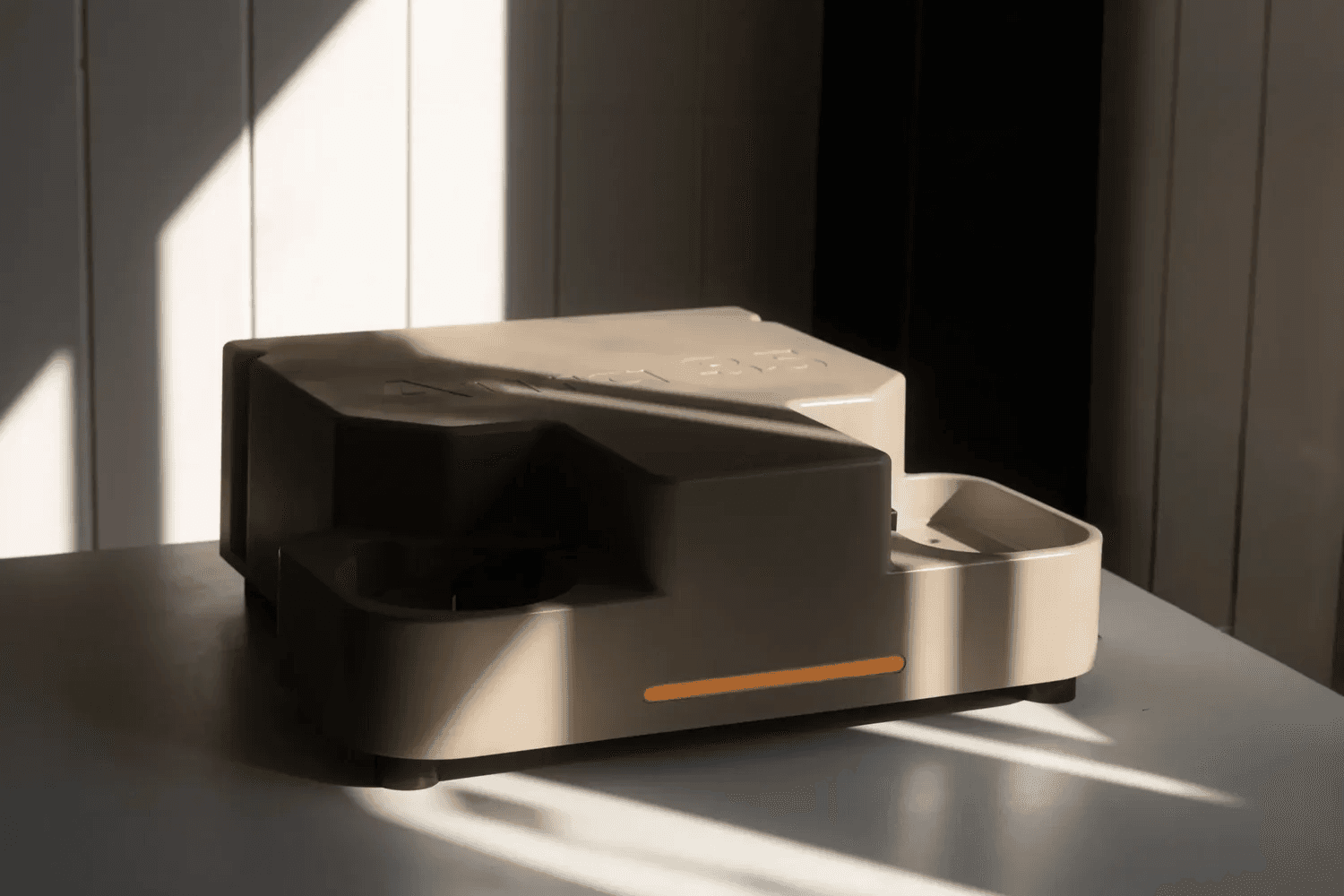 Source: imagetechdigital.com
It is already in day-to-day use at some labs in Europe and the US, which means a new product has joined a lab film scanner market that for years has offered no new options.
- Aura Lab unveils the Aura 35 Minilab lab-grade 35mm scanner – The Dead Pixels Society
- Aura 35 VS Noritsu: What's The Difference, And When Should You Choose – Take It Easy Lab
- The Aura Film Scanner: the future? – Analogue Wonderland
What is the Aura 35 Minilab?
As the name suggests, the Aura 35 Minilab is a 35mm-only scanner aimed at neighborhood minilabs. It is a sibling of the Aura 35 Pro and uses the same optics, and according to Aura Lab it was designed on the assumption that it will "run in a lab every single day." Based on the company's newsletter announcement and a technical data sheet obtained by FilmFocus, the main specifications are as follows.
| Item | Specification |
|---|---|
| Supported film | 35mm color negative / black-and-white negative. Strip scanning in 4-frame units or a full uncut roll. No restrictions on frame width, so half-frame, panoramic and similar formats are supported |
| Resolution and optics | 4150dpi (24MP for 24×36mm), up to 6144×4096px. RGB quadrilinear CMOS sensor with an apochromatic industrial lens optimized for flat-field reproduction |
| Dynamic range | 3.6D (72dB), 12-bit sampling |
| Scan time for one 36-exposure roll | Under 6 minutes at maximum resolution, about 3 minutes at medium resolution (3072×2048px), about 1 minute 30 seconds at low resolution (1536×1024px). Around 1,440 frames per hour at low resolution. Scan times measured with correctly exposed Kodak ISO 200 film |
| Software | Comes with dedicated software, "Aura Editor." Features high-accuracy frame detection, automatic color balance suggestions, a dust removal system (patent pending), and export from JPEG up to 16-bit TIFF. Previous orders can be edited while scanning, and customer information can be linked to orders so folder and file names are organized automatically. Runs on Windows 11, with free updates |
| Maintainability | Built from standard parts wherever possible, always available through distributors in each country. Designed to be serviced with common tools. Assembled and calibrated in France |
| Footprint | 73×73cm for the unit itself. Separate space required for the PC |
The Minilab is said to share the same optics and build quality as the higher-end Aura 35 Pro, with the only differences being the scanning volume it is rated for and some Pro-only software features. According to The Dead Pixels Society, the Minilab scans at roughly one third the speed of the Pro, and the Pro is positioned as the better fit for labs that need high-volume processing.
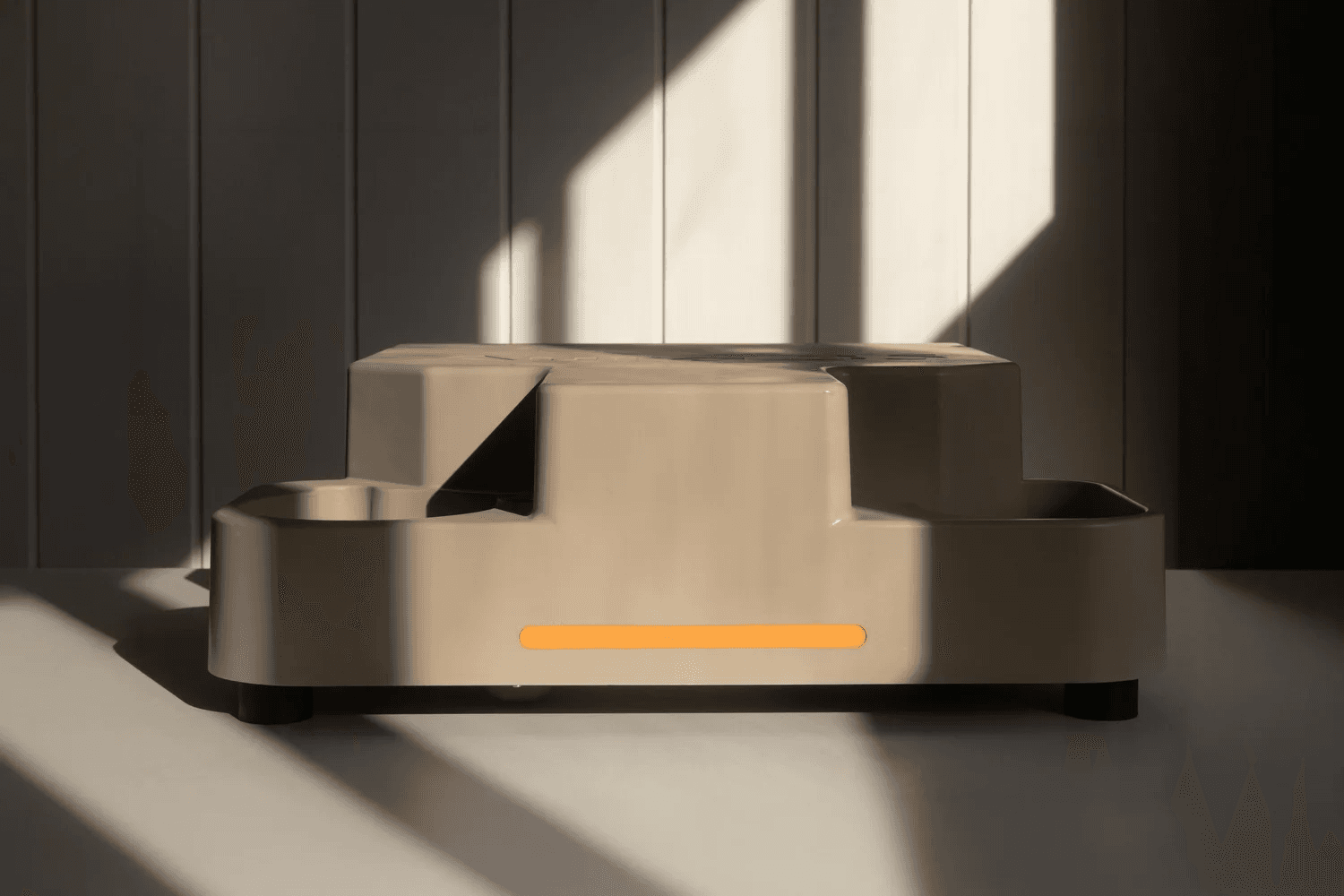 Source: imagetechdigital.com
Pricing has not been published; you need to contact the distributor in your country. For reference, when the Aura 35 was announced in 2023, the plan was a price of 30,000 euros, or a five-year lease at about 600 euros per month.
Overcoming doubts about whether it would ever ship
The Aura 35 was first announced as a concept in October 2023. It was developed over five years by Maximilien Steinberg, who runs six labs in Paris under the name Nation Photo, together with a young engineering team led by Adrien Veau, and was billed as "60 to 80 times faster than conventional minilab scanners." The hardware and software were tuned by comparing scan results against the Fujifilm Frontier and Noritsu HS series scanners owned by Nation Photo.
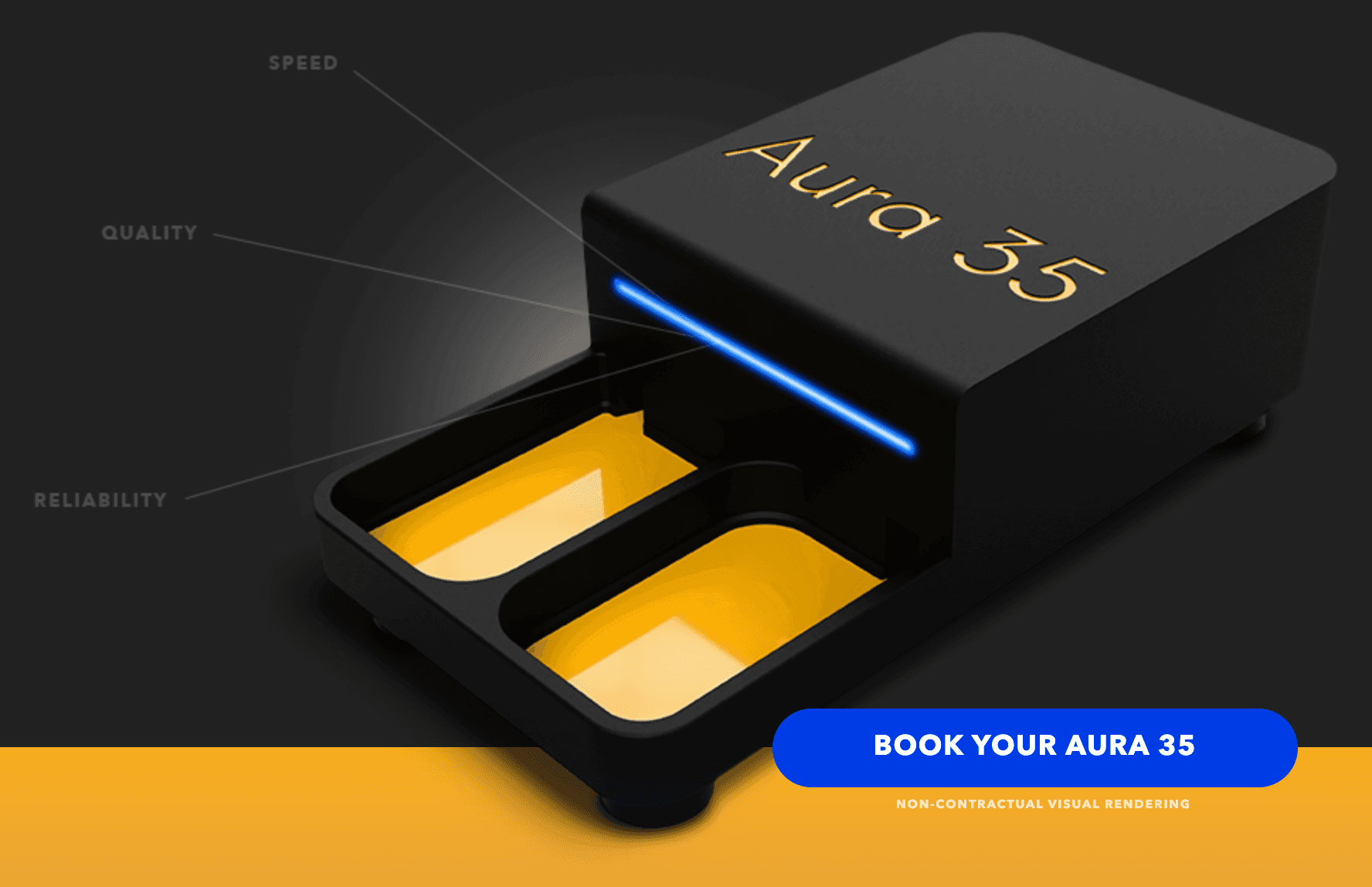 3D rendering from the 2023 development announcement. Source: Aura Labs
However, since only 3D renderings were released at the time, there was no shortage of skepticism on overseas forums, with comments like "there isn't even a photo of a real unit" and "can they really build software that holds up to lab use?" In the film industry it's not unusual for announced products never to make it to shipping, so these reactions were understandable.
At the same time, labs on the ground were voicing strong expectations. Analogue Wonderland, a UK film retailer that also runs its own lab, wrote the following after meeting the development team:
I was very impressed by the team building this machine. They have been working on it for years, and they deeply understand both what modern commercial labs need and the technology they are using. (...) In terms of both technical innovation and output quality, it could move our lab equipment forward by 20 years in one go.
— The Aura Film Scanner: the future? – Analogue Wonderland (translated by the author)
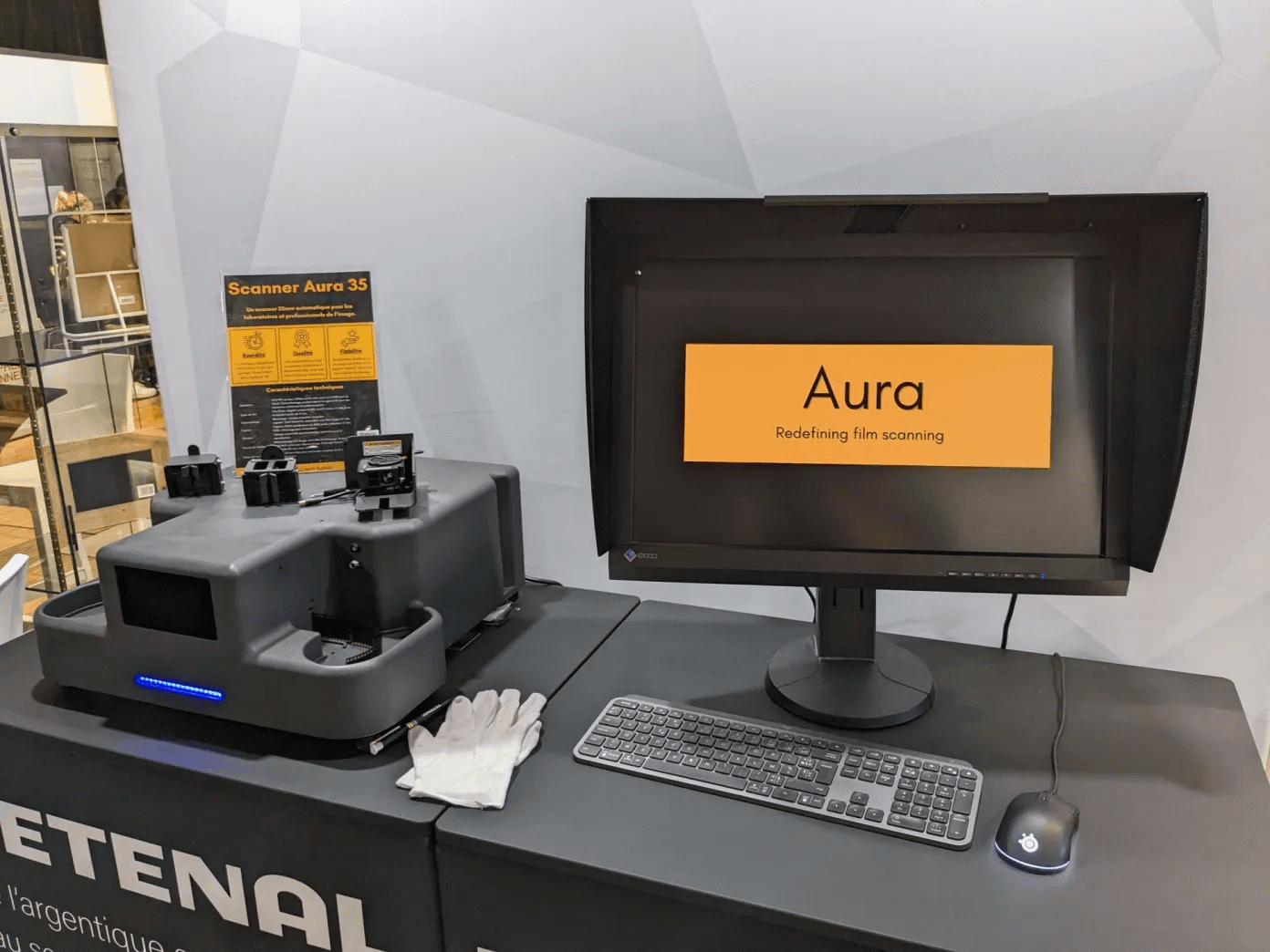 An early working prototype. Source: Aura Labs
About three years have passed since then. The Aura 35 Pro launched in early 2025 and is now sold in 10 markets across Europe and Asia-Pacific, as well as in the US. In German-speaking countries, darkroom equipment maker JOBO became a distributor in September 2025, and in the US it is handled by ImageTech LLC. Take It Easy Lab in the UK has been running an Aura 35 in production for about a year and has published an article comparing it with Noritsu. To the question "Why do Aura scans look flat?", the lab answers:
The Aura was intentionally developed to produce a flat result in order to extract as much information as possible from the negative. The scanner doesn't make creative decisions for you. That means you have a lot more room to adjust things yourself. If you want results you can share as-is without much editing, you may prefer Noritsu.
— Aura 35 VS Noritsu: What's The Difference, And When Should You Choose – Take It Easy Lab (translated by the author)
A product that started as a concept has resolved concerns one by one, actually reached the market, and is now running in working labs. I think this is welcome news for labs around the world that have kept using Fujifilm Frontier and Noritsu scanners long after they went out of production. Steinberg himself has said that he has "seen many labs whose warranties expired long ago, who struggle to find parts, and who live with the constant worry of when their scanner will stop working."
Visiting Aura Lab
I previously had the chance to visit Aura Lab in France. What struck me was that both the hardware and the software had dedicated engineers who specialize in those fields. Despite being a small company, it had experts committed full-time to optical and mechanical design as well as software development. With a lab scanner, what matters is not just the body and optics but also how polished the software is that supports daily operations. I felt that it is precisely this setup that allows Aura Editor to offer features built from a lab operator's perspective, such as "editing the previous order while scanning."
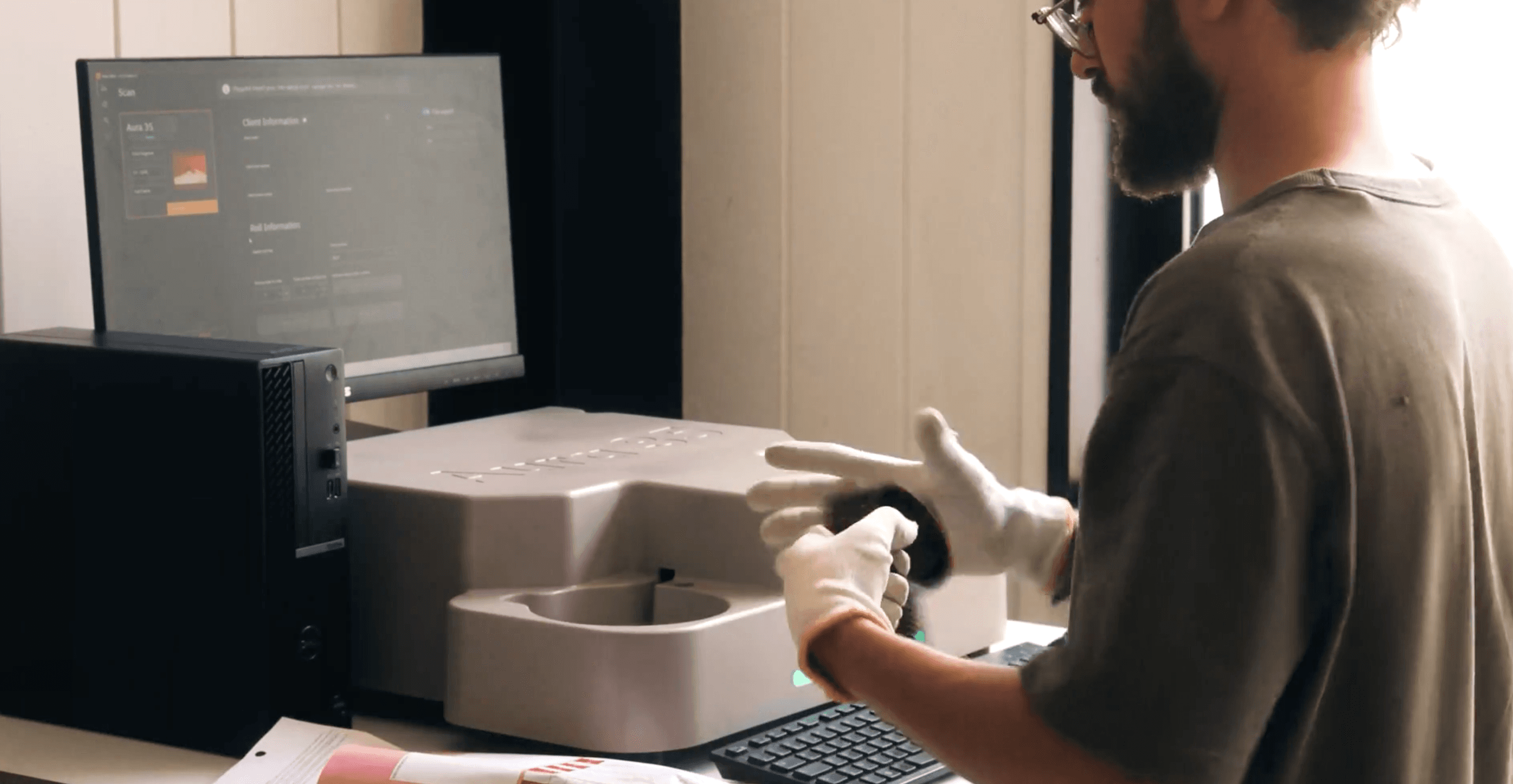 The Aura 35 Minilab in operation. Still from an Aura Labs promotional video
Another thing I want to highlight is the approach to parts selection. The Aura 35 essentially photographs the film the way a digital camera does, and it is designed to use standard parts wherever possible and to be serviceable without special tools. Older minilab machines become unrepairable the moment the supply of proprietary parts dries up, and the fact that the Aura 35 tries to avoid this weakness from the outset is very reassuring for equipment meant to be used for many years.
Availability in Japan
As of September 2026, Aura Lab does not yet have an official distributor in Japan. In the Asia-Pacific region there are distributors in Hong Kong and Australia, but at present a Japanese lab wanting to adopt the scanner has to negotiate with an overseas distributor on its own.
In Japan too, aging Frontier and Noritsu machines and dwindling parts supplies are a common problem for labs. An official sales and support network in Japan would be a major step forward for the sustainability of film processing labs. We'll keep watching how things develop.