NewsBy FilmFocus
Only a Few Months of 500T / 250D Stock Left: Reflx Lab Explains Where Its Respooled Film Sales Stand
This is an AI translation of an article originally published in Japanese. If anything reads oddly, the Japanese original is the authoritative version.
"Kodak's decision threatens the innovation and creativity that independent photographers and small businesses bring to the film photography ecosystem." With those words, Reflx Lab, known for respooling Kodak motion picture film, has criticized Kodak in a blog post that also explains what lies ahead for its respooled film sales.
According to the post, the company has secured only "a few more months" of stock for its films based on "500T" and "250D". Fortunately, it seems Kodak's move alone isn't enough to put Reflx Lab's business itself at risk.

We covered Kodak's restrictions on motion picture film sales in the article below, but this is the first time a major respooler has put out information in such a comprehensive form.
Until now, businesses selling respooled film have bought long rolls of motion picture film from Kodak, respooled it into still photography formats, most notably 35mm, and sold it on. Recently, however, Kodak has reportedly begun requiring documentation proving the film will be "used for motion picture production" before it will sell, a policy said to have made it harder for respoolers to buy film directly.
In the post, Reflx Lab makes the following points:
- The roots of 135 film (35mm film) go back to William Kennedy Laurie Dickson, who respooled 70mm motion picture film and repurposed it for still photography. Kodak's decision runs counter to this kind of innovation and creativity.
- Some argue that respooled film competes with Kodak films such as Ultramax and Portra, but even if respooled film disappeared from the market, it is doubtful that Kodak's own films could absorb all of that demand.
- Some respoolers also bear some responsibility for Kodak's decision. For example, some disposable cameras sold at Walmart in the US were loaded with expired ECN-2 film.
Respooled films such as Reflx Lab's "500T" and CineStill's "800T" are often motion picture films (which require a process called ECN-2) with a protective layer known as the remjet removed, so that they can be developed in C-41 like ordinary color negative film. Films that still have the remjet layer are almost always marked "ECN-2", but some lack this marking, and there are cases where labs mistakenly put ECN-2 film into a C-41 processor.
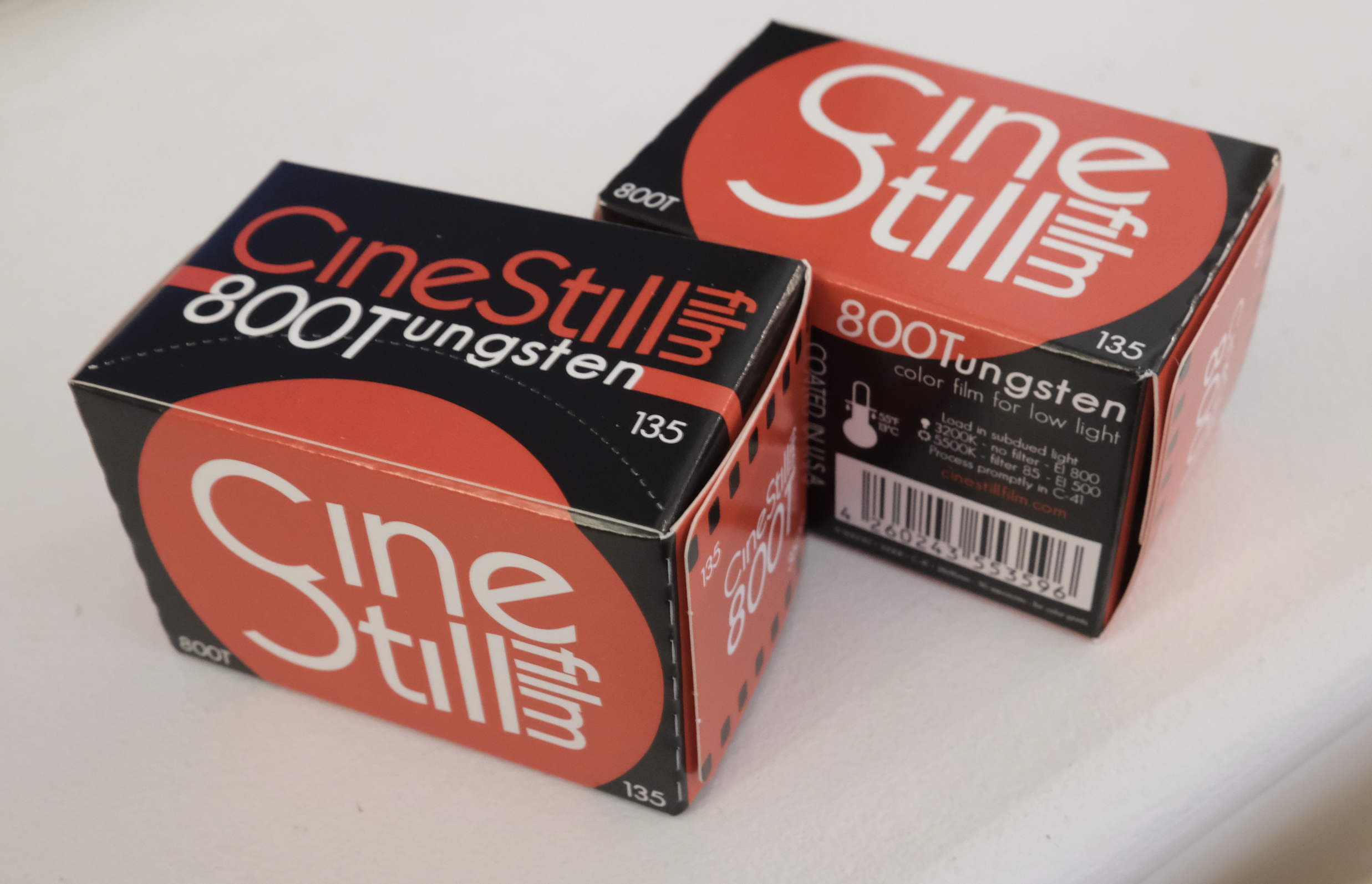 Films such as CineStill 800T have the remjet layer removed beforehand so they can be developed in C-41
If film with a remjet layer accidentally ends up in a C-41 processor, the remjet that comes off can stick to the inside of the machine and cause it to break down. In many cases the detached remjet stays suspended in the chemistry as a powder, so it is not unusual for the chemicals to need replacing entirely (depending on the processor's capacity, tens of thousands of yen worth of chemistry can go to waste).
From a lab's perspective, those are the problems behind the "some respoolers" Reflx Lab mentions in its blog. Still, if Kodak wanted to solve the problem of ECN-2 ending up in C-41, it should have had other options available (such as selling C-41 film in long rolls). The move seems to be driven by a business decision aimed at profit, but Kodak has also been one of the pillars supporting film photography culture. Some see this as groundwork for Kodak selling its own respooled film, but we hope this decision doesn't end up casting a dark shadow over the growth of film photography culture.