ResearchBy FilmFocus
Film Users Shoot 13.7 Rolls a Year: Results of the Film Photography Survey 2024
This is an AI translation of an article originally published in Japanese. If anything reads oddly, the Japanese original is the authoritative version.
From November 26 to December 31, 2024, FilmFocus ran the "Film Photography Survey 2024." The survey was conducted through an online questionnaire and received a total of 802 responses. This article organizes the results as statistical data and offers some analysis.
1. Background
Previous film photography surveys in Japan include the "User Survey" Ricoh conducted in 2023 alongside its "Film Camera Project," and the "Film Photography Survey" Lomography Japan ran in 2019. However, neither published detailed results, and there is currently no publicly accessible, ongoing survey of film photography in Japan.
Outside Japan, ILFORD Photo runs its "Global Film Users Survey" every few years. The 2014 edition drew 2,100 participants and the 2018 edition 6,800. The results have been partially published and provide valuable quantitative data on the state of film photography. On the English-language forum reddit, surveys were also run in 2015 with 327 participants and in 2020 with 1,522.
Believing that Japan needs an open survey of this kind as well, FilmFocus carried out the "Film Photography Survey 2024." By measuring and reporting on users' habits and needs in quantitative terms, we hope to contribute in some small way to the film photography ecosystem.
2. Summary of Results
- Film users shoot an estimated 13.7 rolls of 35mm film per year. About half of respondents use 120 film, shooting 6.7 rolls of 120 per year. Fewer than 10% of respondents use sheet film.
- Film users own an average of 6.2 film cameras. The number grows with experience, and people who have been shooting film for more than 10 years own an average of 8.0 film cameras.
- Among people who took up film photography in the past five years, the internet and social media were the most common trigger. Online information is a key factor in bringing in new film users.
- 30% of respondents shot film more often over the past year, slightly more than the 27% who shot less. The biggest reason for shooting more was "buying a new camera," while the biggest reason for shooting less was "cost."
3. Results
3-1. What got people into film photography
The results differed by level of experience. Among those who started film photography within the past five years, the largest share cited "the internet / social media" as their motivation. With more years of experience, "family" becomes a more common trigger: in the 3–10 year group, roughly one in four started film photography because of a family member. That pattern does not hold for people who have been shooting film for more than 10 years, however, for whom the most common answer was "film was the only option."
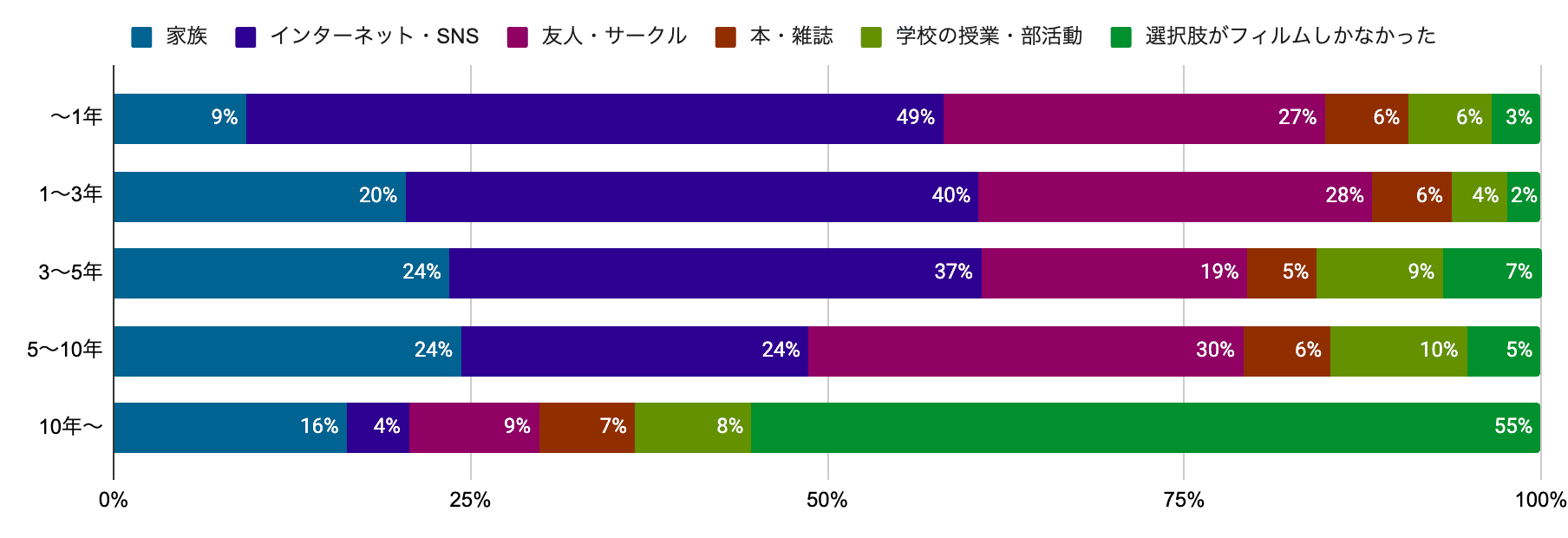 Figure 1: What got people into film photography, by years of experience (single answer)
3-2. What people like about film photography
Asked to choose all that apply, respondents overall most often picked "I like the look of the photos" and "the excitement of waiting for the pictures." We also found that the share of people who enjoy "developing and printing" grows with experience. The results suggest that people drawn to film by its distinctive look and process go on to "discover" new pleasures such as developing and printing as they keep shooting.
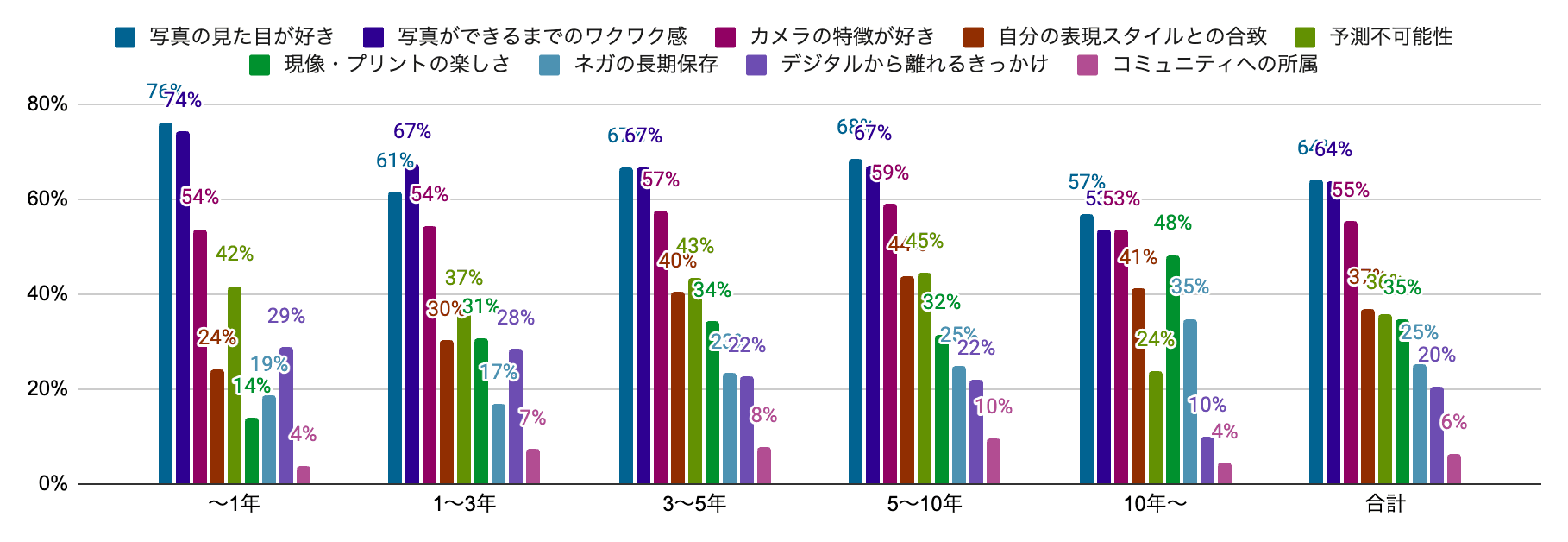 Figure 2: What people like about film photography, by years of experience (multiple answers)
3-3. Where people get information about film photography
Asked to choose all that apply, respondents mostly named online sources such as "social media," "non-manufacturer websites," and "official manufacturer websites." Social media in particular was the most used source of information regardless of experience. In the group with more than 10 years of experience, the share citing "official manufacturer websites" overtook the share citing "non-manufacturer websites."
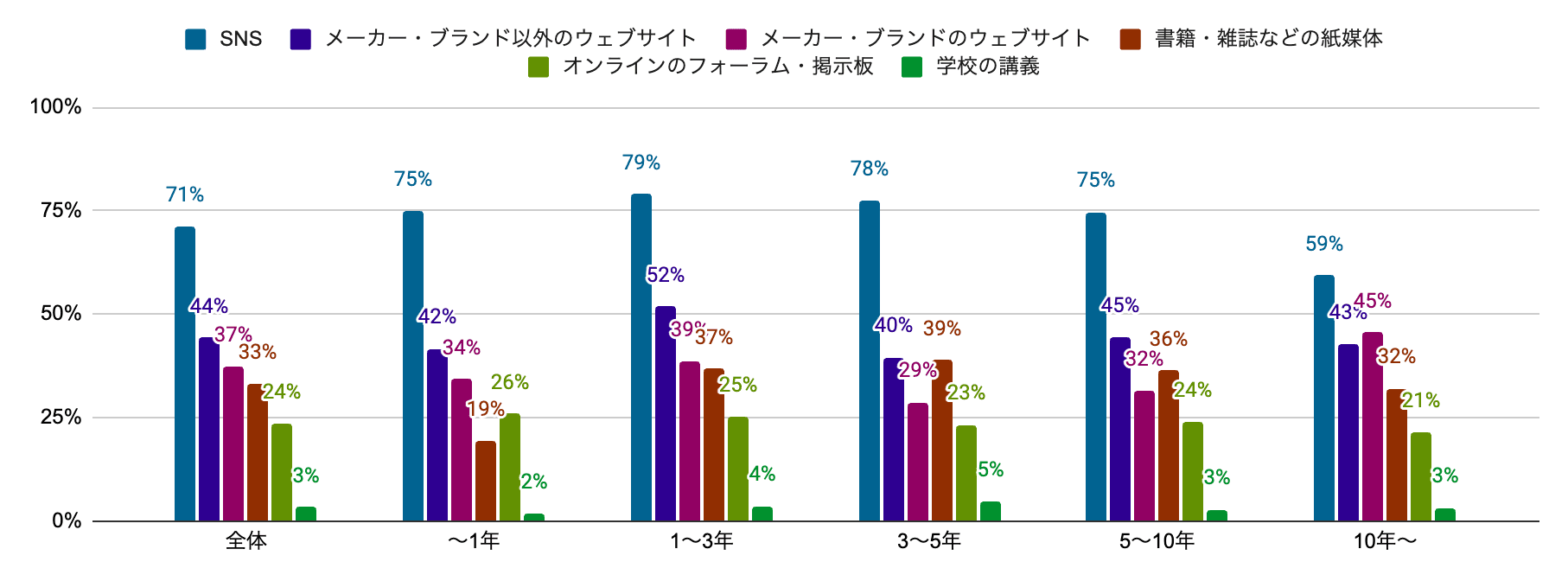 Figure 3: Where people get information about film photography, by years of experience (multiple answers)
3-4. Types and amount of film used in the past year
When asked what types of film they used in the past year and how much, 96% of respondents said they had shot at least one roll of 35mm film and 54% at least one roll of 120 film. 20% had used a disposable camera, and fewer than 10% had used sheet film. Heavy users shooting "50 or more" rolls a year made up 6% of respondents for 35mm and 1% for 120.
Estimating from the responses, film users shoot an average of about 13.7 rolls of 35mm film and about 6.9 rolls of 120 film per year.
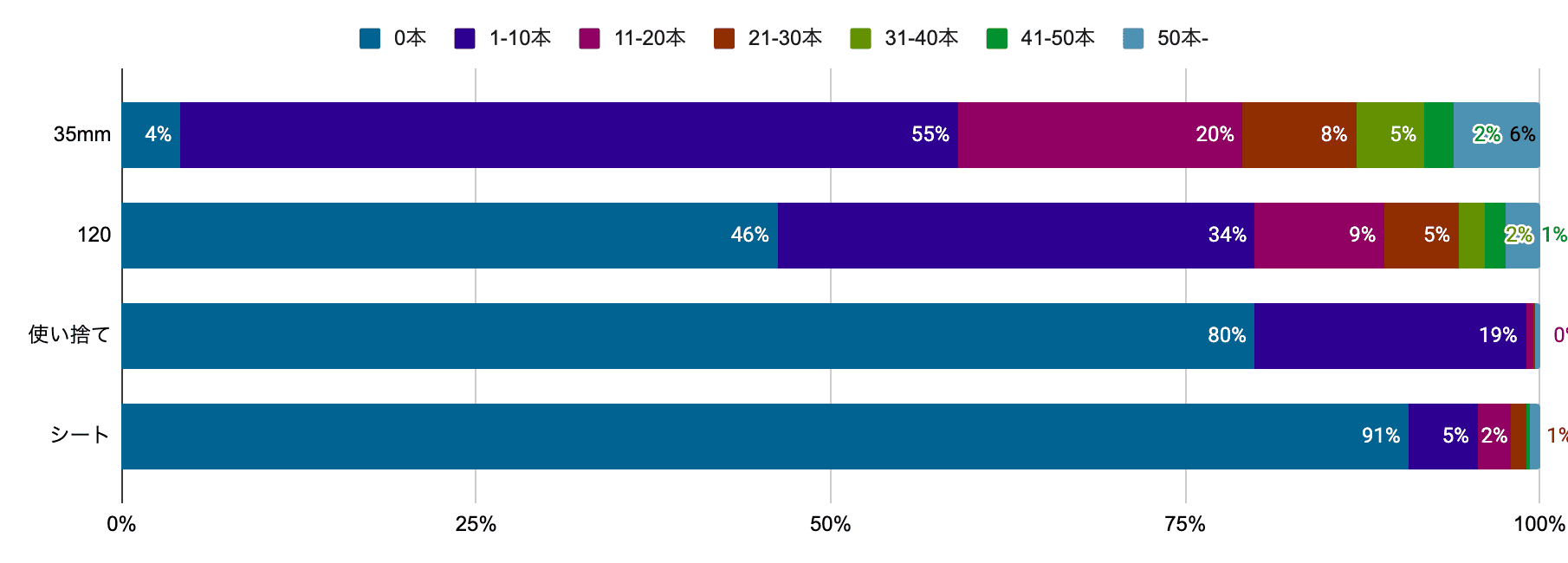 Figure 4: Types and amount of film used in the past year
3-5. Changes in how often people shoot film, and why
30% of respondents said they shot film "more" often over the past year, and 27% said "less." The margin is small, but more people increased their use than reduced it.
In free-text answers, the most common reason for shooting more was "buying a new camera" (23%), followed by "recently started / came back to film" (12%). On the other hand, the standout reason for shooting less was "rising costs" (70%), far ahead of any other reason.
 Figure 5: Change in how often people shot film over the past year
3-6. Film brands used in the past year
We asked respondents which film brands they had used in the past year (multiple answers allowed). Fujifilm and Kodak had high usage rates regardless of experience, while Ilford's usage rose with experience, from 35% among those with less than a year of experience to 57% among those with more than 10 years. Lomography and CineStill were most used by people with 3–5 years of experience.
We also tallied the number of film brands each respondent used. Comparing by experience, the number of brands used keeps rising for the first five years of shooting film, but begins to fall after five years. This suggests that beginners try out a range of brands and films to find what suits them, while more experienced shooters tend to settle on favorite brands.
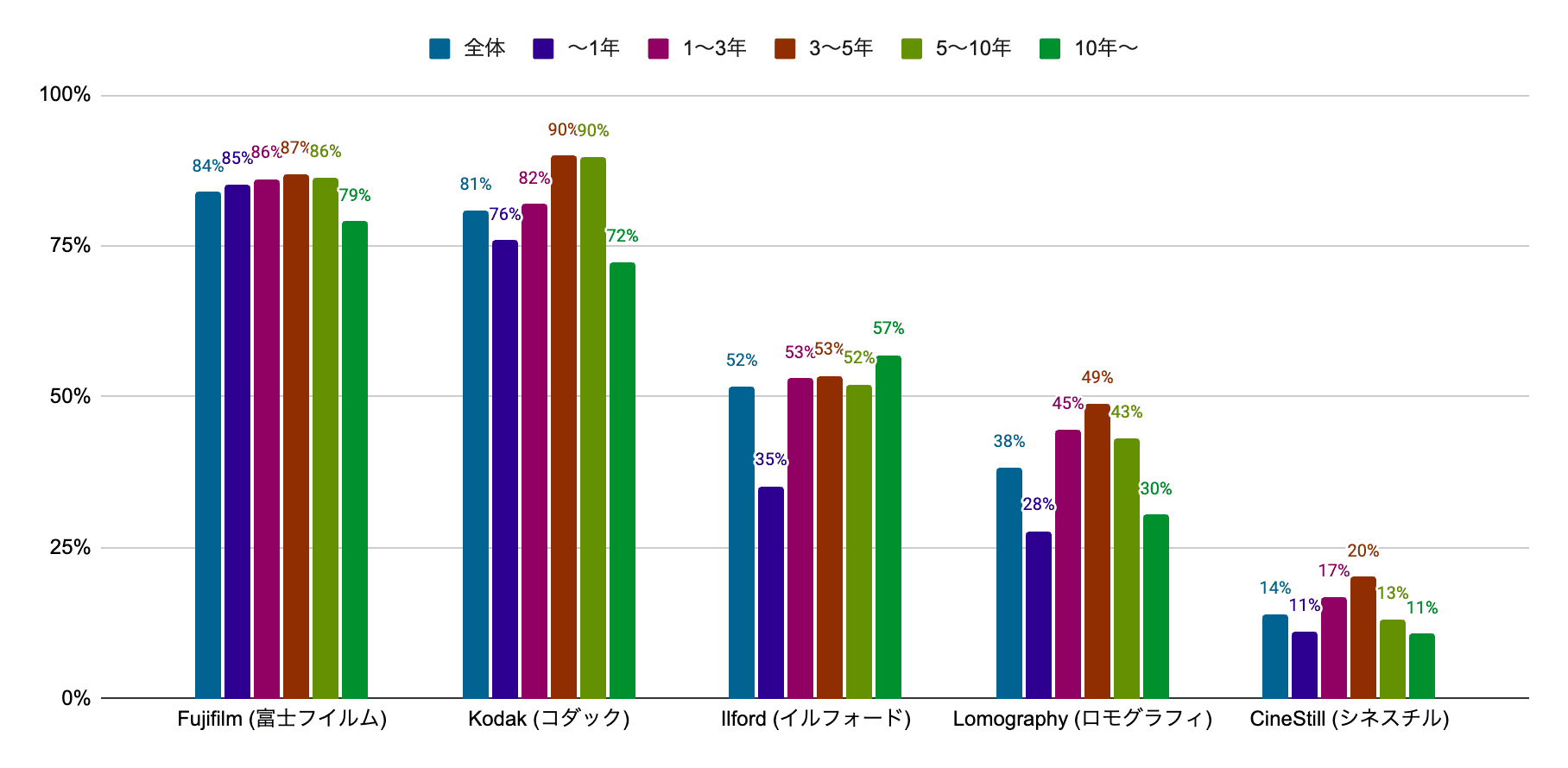 Figure 6: Film brands used in the past year, by years of experience
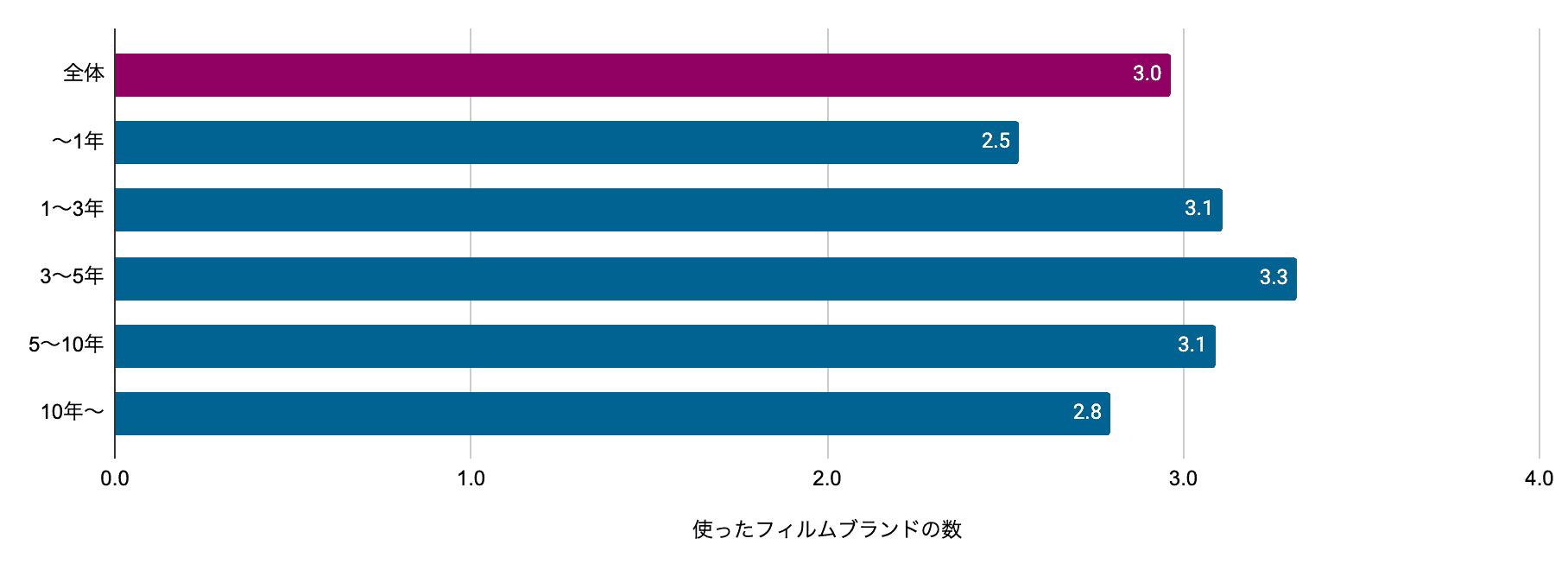 Figure 7: Number of film brands used in the past year, by years of experience
3-7. Number of film cameras owned
The more experienced the user, the more film cameras they tend to own. Estimating from the responses, the average number of film cameras owned across all respondents was 6.2. People who started shooting film less than a year ago own an average of 3.5 film cameras, while those with more than 10 years of experience own an average of 8.0.
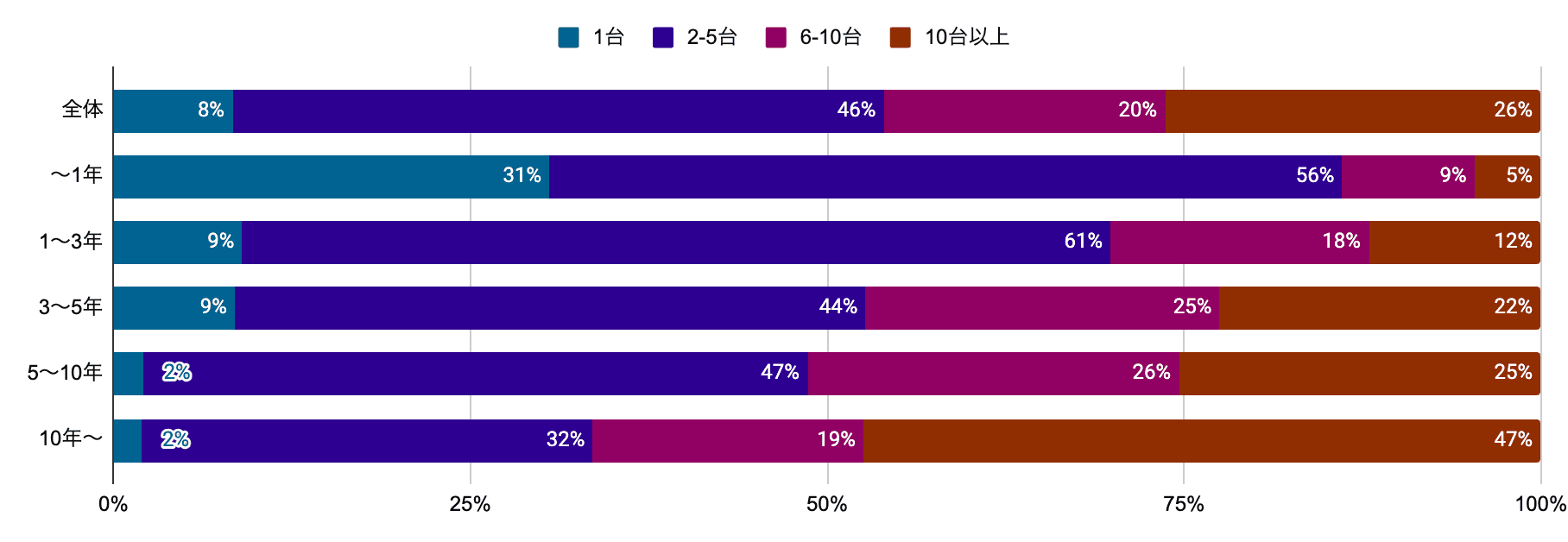 Figure 8: Number of film cameras owned, by years of experience
3-8. Film users' values
To explore film users' values, we asked respondents to rate each of the following items on a 10-point Likert scale. The average scores were as follows.
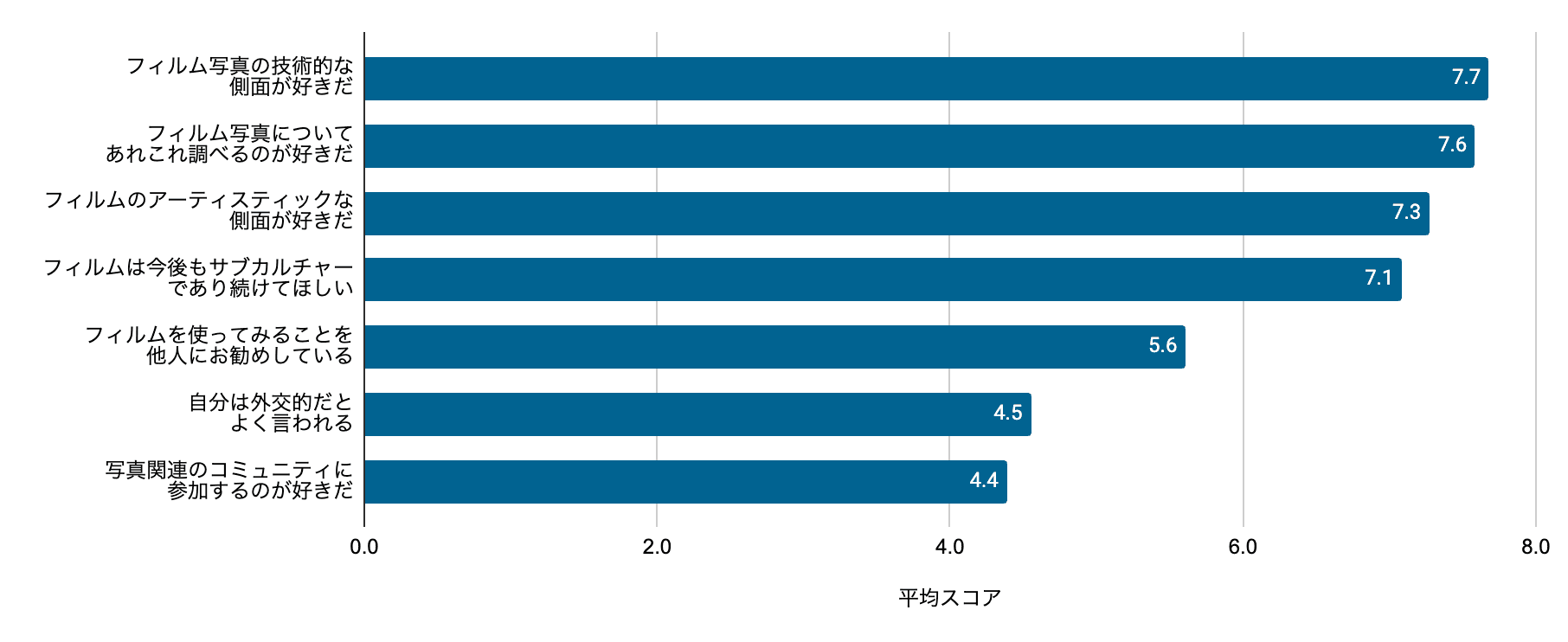 Figure 9: Film users' values, average scores
We also ran a correlation analysis on these items, with the results shown below. People who "enjoy researching" showed a strong tendency toward interest in "technical" aspects, suggesting that those who dig into film photography are more likely to be interested in technical knowledge and know-how, equipment, and processes. People who "recommend film photography" also scored higher on extroversion and community orientation, which suggests that those who recommend film to others may be sociable by nature and take an active stance toward the community.
The results also indicate that artistic and technical orientations can coexist to some degree. People drawn to the artistic side of film are not entirely indifferent to technique; they tend to enjoy seeking out a certain amount of knowledge as well.
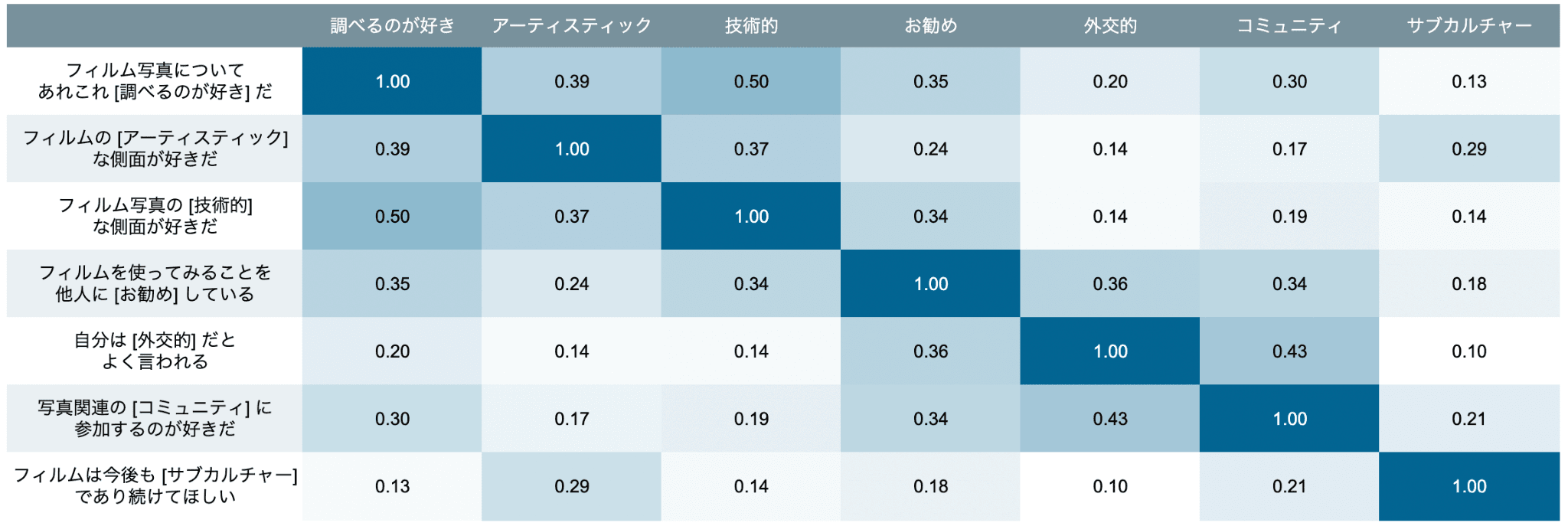 Figure 10: Film users' values, correlation analysis
3-9. How film is developed
Finally, we asked how respondents get their exposed film developed. 67% have all their film developed at a lab, 26% switch between lab and home development depending on the film, and 7% develop all their film themselves.
Broken down by experience, the share of people who develop their own film generally rises with years of experience. The group with the highest share is those with more than 10 years of experience, where a combined 44% develop film themselves.
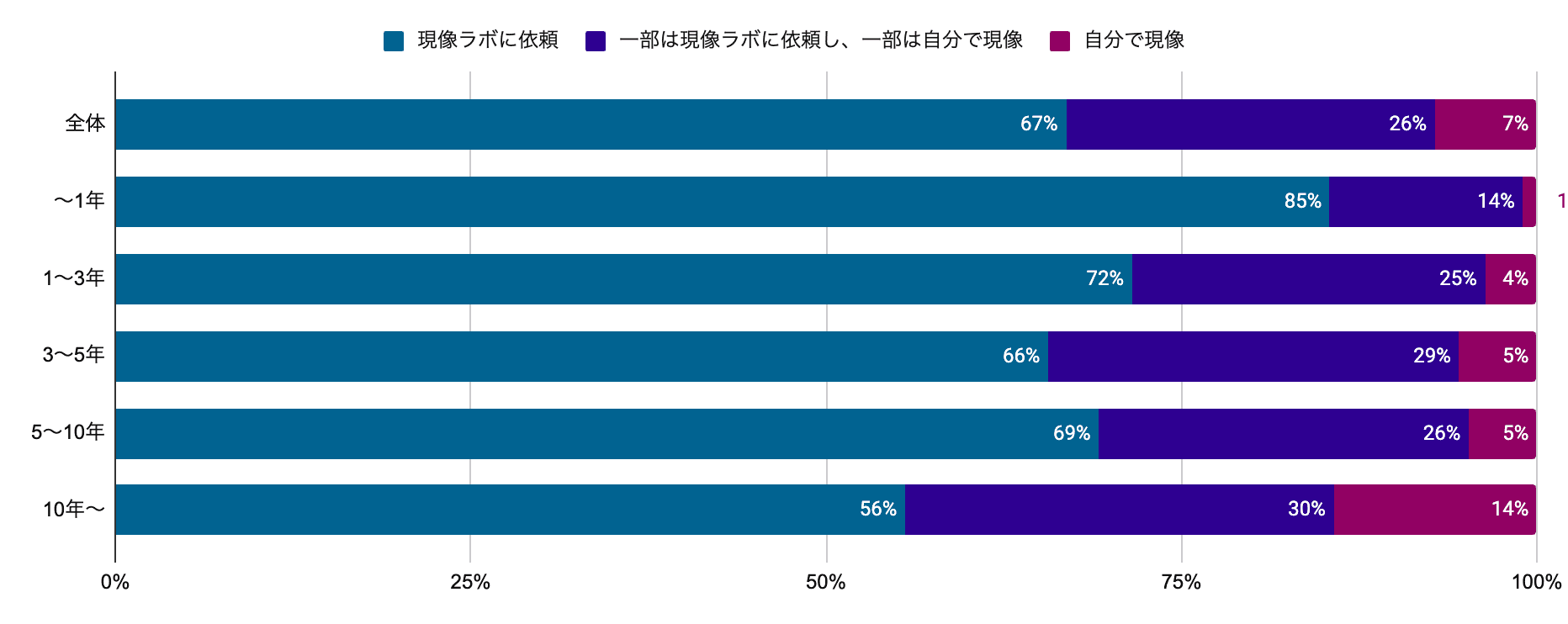 Figure 11: How film is developed, by years of experience
4. Insights
4-1. Cost concerns run through the entire customer journey
"Cost" was the most common reason given for shooting film less. Looking more closely at the free-text answers, respondents voiced concerns about rising costs across the whole film ecosystem, not just the price of film but also developing and camera repairs.
The most frequently mentioned issue was the soaring price of film itself. A major factor in film prices is the cost of silver, a key raw material. According to Mitsubishi Materials (三菱マテリアル), the price of silver rose roughly sixfold between 2000 and 2024. Film manufacturers are also facing higher costs on many other fronts, including rising energy prices and inflation. Kodak is also expected to restrict sales of respooled motion picture film. Given this external environment, it is hard to imagine film prices falling significantly in 2025. On the other hand, there are reports that Fujifilm restarted a color film production line in China in 2024, and how this develops will be worth watching.
Many respondents also said the cost of "developing and scanning" is a burden. In Japan, film labs have been closing or suspending operations one after another, and the balance between demand for and supply of developing services may be starting to break down. At the same time, labs still rely on older-generation processing equipment that is no longer supported, leaving the future of the developing business uncertain. Some overseas manufacturers have announced developing and scanning equipment, but much of it is still in development, and it will likely be at least several years before new equipment has an impact on the film photography ecosystem as a whole. What emerges from the survey is that while film photography enjoys enduring popularity and demand, the ecosystem as a whole is under strong pressure from rising costs. Even so, it is encouraging that 30% of respondents are shooting film "more" often. The free-text answers show people finding ways to keep enjoying film while keeping costs down, such as using bulk rolls and expired film or developing at home.
4-2. New cameras are a bright spot
We received many comments about new models announced or released in 2024, led by the "Pentax 17" and the "Rollei 35AF." The comments were generally positive, with many along the lines of "It's reassuring that new cameras exist" and "A new camera has me shooting film more often." Others expressed hope that other major manufacturers would release film cameras, or that currently discontinued films would be revived.
We have also received several reports that new film cameras will be released in 2025. A new film camera launch is newsworthy in its own right and reassures users that "film is a culture that isn't going away." At present, however, we have heard nothing about new film cameras from any major brand other than Pentax (excluding Fujifilm's "instax" series). If brands such as Nikon, Canon, or Fujifilm were to follow Pentax back into film cameras, they could potentially unlock a great deal of demand.
4-3. Younger people want a reason to step away from digital
The younger the respondent, the more likely they were to say they like film photography because it gives them "a reason to step away from digital." This applied to 34% of respondents in their teens and 24% of those in their twenties, suggesting that for this group, film photography may be embraced as a form of "digital detox."
Looking beyond film photography, analog formats such as vinyl records and cassette tapes are also being reappraised in the music world. Vinyl in particular outsold CDs in the United States in 2020 and has become an "old yet new" source of income for artists.
Meanwhile, a few years behind the film camera trend, "retro digital cameras" have also become a hot topic. People appreciate their body designs, which evoke "Heisei retro" nostalgia, the look of photos from previous-generation CCD sensors, and the fact that, compared with the do-everything smartphone, they have only one function, taking pictures, which ironically feels fresh. This trend is seen as having originated on TikTok, and it will be interesting to see how this "digital camera" trend is received by people who want "to distance themselves from the digital world."
5. Closing
Those are the results of the "Film Photography Survey 2024." We would like to thank everyone who took part once again. If you have any comments or questions about the survey, please contact us via our contact form. FilmFocus hopes to continue running surveys like this one and reporting on film-related topics. Thank you for your continued support.